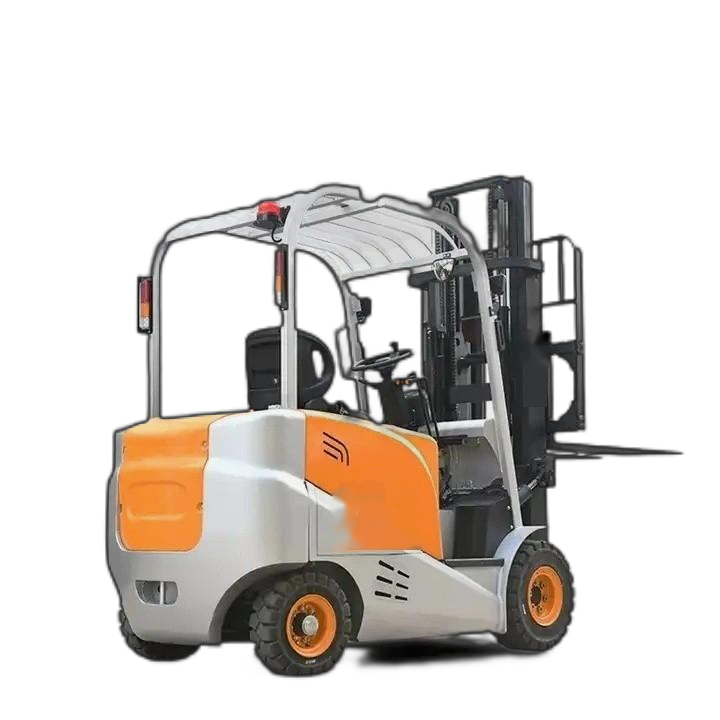
Overseas brands (Linde, Jungheinrich, Toyota, Hyster, etc.) excel in precision hydraulics, ergonomics, high-end precision sensors and long-term overall durability. Relying on a complete lithium battery industrial chain, self-developed three-electric systems, rapid intelligent upgrading, wide working condition adaptability, superior total cost of ownership, localized supply chains and flexible customization, domestic electric forklifts boast six irreplaceable technical strengths. They have achieved a latecomer advantage especially in lithium electrification, heavy-load electrification and intelligent warehousing solutions.
I. Absolute Edge in the Full Power Battery Industrial Chain, Leading Lithium Battery Technology Routes over Foreign Brands
Mature LFP (Lithium Iron Phosphate) Technology: Superior Cost & Safety Performance
Domestic suppliers including CATL, BYD and Gotion High-Tech develop forklift-specific lithium batteries. The localization rate of cells, separators, electrolytes and cathode materials exceeds 95%, eliminating reliance on Japanese and Korean battery suppliers.
- Cycle life: 3,000–10,000 cycles
- Active BMS balancing with cell voltage difference ≤5mV and SOC error <1%
- Stable operation under a wide temperature range of -40℃ to 65℃, suitable for cold chain warehouses, mines and low-temperature northern factories
- Thermal runaway protection meets UL9540A standards with multi-stage thermal insulation, restraining thermal propagation for over 30 minutes, delivering better safety than foreign ternary lithium battery solutions.
Most foreign brands still adopt outdated lead-acid architectures or high-cost ternary lithium batteries, lagging behind comprehensively in fast charging, low-temperature performance and overall cost.
Diversified Energy Replenishment Solutions for High-Intensity Multi-Shift Operations
Domestic forklifts come standard with 1–2 hour fast charging and standardized battery swapping; heavy-duty models are equipped with liquid-cooled ultra-fast charging. Sany and Taizhong have launched 300V high-voltage lithium battery platforms that drastically cut charging time.Vehicle-to-Grid (V2G) interaction is also deployed to enable automatic charging during off-peak hours at factories, cutting annual power consumption by 8%–12%. For most overseas brands, fast charging and battery swapping are expensive optional extras without intelligent peak-shaving charging algorithms.
World-Exclusive Breakthroughs in Heavy-Duty Lithium Batteries
Taizhong rolled out the world’s largest 65-ton lithium counterbalance forklift with dual-motor high-voltage direct drive, breaking the long-term monopoly of European, American and Japanese manufacturers over heavy-duty forklifts. Mass production of 2–10 ton hydrogen fuel cell forklifts has been realized, while sodium-ion and solid-state batteries are undergoing vehicle trials. A multi-energy technology matrix covering lithium, hydrogen and sodium-ion batteries has been established, whereas overseas brands make slow progress in heavy-load electrification.
II. Highly Self-Developed & Highly Localized Three-Electric Systems with Independent Control over Power Efficiency and Supply Chains
Full Domestic Replacement of Motors and Electronic Controls for Higher Transmission Efficiency
The localization rate of electronic controls reaches 98.7%, and permanent magnet motors hit 95.3%. Inovance, Jing-Jin Electric and other firms co-develop forklift-specific drive systems with Heli and Hangcha:
- Permanent magnet synchronous drive efficiency ≥95%, energy recovery rate 18%–22%, cutting no-load power consumption by 12%–18%
- Support OTA remote upgrades and CAN bus vehicle interconnection for intelligent schedulingForeign brands mostly source electronic controls from European SEW and Japanese transmission suppliers. Their full systems cost 1.8 times more than domestic alternatives with a 12–16 week lead time and extremely slow iteration cycles.
Vertical Vehicle Integration & Integrated Three-Electric Development
Hangcha established a new energy joint venture with Gotion High-Tech to synchronously design cells, battery packs and complete vehicles. BYD’s Blade Battery is directly integrated into vehicle structures to eliminate redundant battery enclosures, reducing weight and boosting space utilization. For foreign brands, batteries, motors and vehicles are supplied by separate vendors, leading to lengthy matching and calibration cycles.
Superior Protection for Extreme Working Conditions
Top domestic three-electric systems feature IP67 dustproof and waterproof ratings as standard with water-cooled heat dissipation, adapting to high-humidity ports, dusty mines and high-temperature deserts. Entry-level foreign models mostly only reach IP54 protection and suffer power derating under prolonged high-temperature operation.
III. World-Leading Speed of Intelligent & Unmanned Deployment with Integrated Hardware & Software Advantages
Low-Cost, Fast-Delivered Local Perception Hardware
LiDAR, 3D vision, millimeter-wave radar and SLAM navigation are all domestically produced ( Benewake, Orbbec, Hesai). Full intelligent modules cost 40% less than imported equivalents with annual shipment growth above 30%.Self-developed on-board forklift operating systems such as iFork OS natively connect with domestic WMS, TMS and MES warehousing systems without extra secondary development. Foreign AGV forklift systems are closed, requiring costly customization to link with domestic logistics software.
Leading Large-Scale Commercialization of Unmanned Forklifts
China’s penetration rate of L4 unmanned forklifts stands at 12.7%, far outpacing overseas growth rates. Integrated intelligent warehousing packages consisting of single lithium forklifts, AGV clusters and cloud dispatching can be rapidly delivered, with mass deployments at JD Logistics, Cainiao and new energy factories.Overseas brands mostly sell forklifts separately, with automated dispatching systems charged independently. Full packages carry heavy premiums and long implementation cycles.
Locally Optimized AI Algorithms for Energy Saving & Safety
Built-in algorithms for load self-adaptation, ramp energy recovery and AI pedestrian collision avoidance are optimized for China’s e-commerce scenarios featuring high turnover, narrow aisles and multi-shift operations. Actual tests show energy consumption roughly 15% lower than foreign equivalents under identical working conditions.
IV. Flexible Custom R&D for Working Conditions, Adapting to Diverse Complex Domestic Scenarios (Key Weakness of Overseas Brands)
Rapid Iterative Development for Segmented Scenarios
Domestic OEMs complete customized development in merely 9 weeks (compared to 18 weeks for most foreign brands), enabling fast customization of:
- Narrow-aisle lithium reach trucks for e-commerce; IP54 clean oil-free hydraulic models for food & pharmaceuticals
- Heavy-duty lithium forklifts for mines and ports, low-temperature special models for cold storage, compact lithium forklifts for construction sitesForeign products feature high standardization; custom modification takes over half a year with extremely high retooling costs.
Localized Structural Parts & Controllable High-Strength Steel Costs
Baowu Steel and Citic Special Steel supply dedicated high-tensile frame steel. Modular platform design allows a single chassis to derive a full range of 1–10 ton models. Foreign frames and masts are mostly custom imported, with expensive spare parts and long lead times for replacements.
V. Technical & Economic Advantages in Total Cost of Ownership (TCO)
Significant Gap in Procurement Costs
For mainstream 1.5–3 ton lithium forklifts, domestic models average around 80,000 RMB, while equivalent Linde and Toyota units cost over 120,000 RMB, a procurement price gap of 28%–45%. This disparity stems from industrial chain scale benefits rather than reduced configurations.
Wider Five-Year Total Operation Cost Gap
- Energy: Domestic LFP forklifts consume less power and support off-peak charging, saving over 30,000 RMB in electricity per unit over five years
- Maintenance: Over 2,000 local service outlets nationwide offer 4-hour fault response. Spare parts reach a 90% localization rate, with routine maintenance costing 800–1,200 RMB per service. Foreign spare parts are mostly imported, doubling maintenance fees and leading to 3–7 day repair waits
- Longer three-electric service life; replacement batteries cost only 60% of original foreign OEM batteriesComprehensive calculations show the 5-year TCO of domestic forklifts is nearly 40% lower than overseas brands.
VI. Complete Local Manufacturing Supply Chain, Technical Advantages in Mass Production & Delivery
Overall Localization Rate of Core Components: 86%–92%
Batteries, motors, electronic controls, hydraulics, frames and wiring harnesses are all locally sourced within a 150km procurement radius, drastically cutting logistics and inventory costs while minimizing supply disruption risks. Foreign brands rely heavily on European, American, Japanese and Korean components, making deliveries vulnerable to geopolitical volatility and long ocean shipping cycles.
Mature Automated Intelligent Manufacturing System
Robotic welding, intelligent coating and modular final assembly deliver a finished product yield above 95.5%, with a 4–6 week lead time for bulk orders. Foreign factories face capacity constraints, with order backlogs generally spanning 3–4 months.
Supplement: Existing Shortcomings of Domestic Electric Forklifts vs. Overseas Brands (Objective Comparison)
- Gaps remain in high-end precision hydraulics, hydrostatic transmission control accuracy and ergonomic shock-absorbing cabin experience
- Ultra-high-precision inertial navigation, high-grade automotive IGBTs and premium sensors still partially rely on imports
- After-sales network coverage in Europe and the U.S. lags behind the global service systems of Linde and Toyota
Summary of Core Differentiated Technical Advantages
- Unmatched full lithium battery industrial chain: All-round leadership in LFP batteries, fast charging & swapping, heavy-load electrification and multi-energy technology routes
- Self-developed three-electric systems with high independent control: Superior power efficiency, cost and delivery speed versus foreign outsourced component solutions
- Faster localized intelligent deployment: Domestic perception hardware natively compatible with domestic warehousing systems, delivering unmatched cost performance for full intelligent logistics packages
- Strong flexible scenario customization capability: Rapid adaptation to diverse working conditions including e-commerce, cold chains, mines and ports
- Optimal technical economy over the full lifecycle: Greatly reduced combined costs covering procurement, energy consumption and maintenance