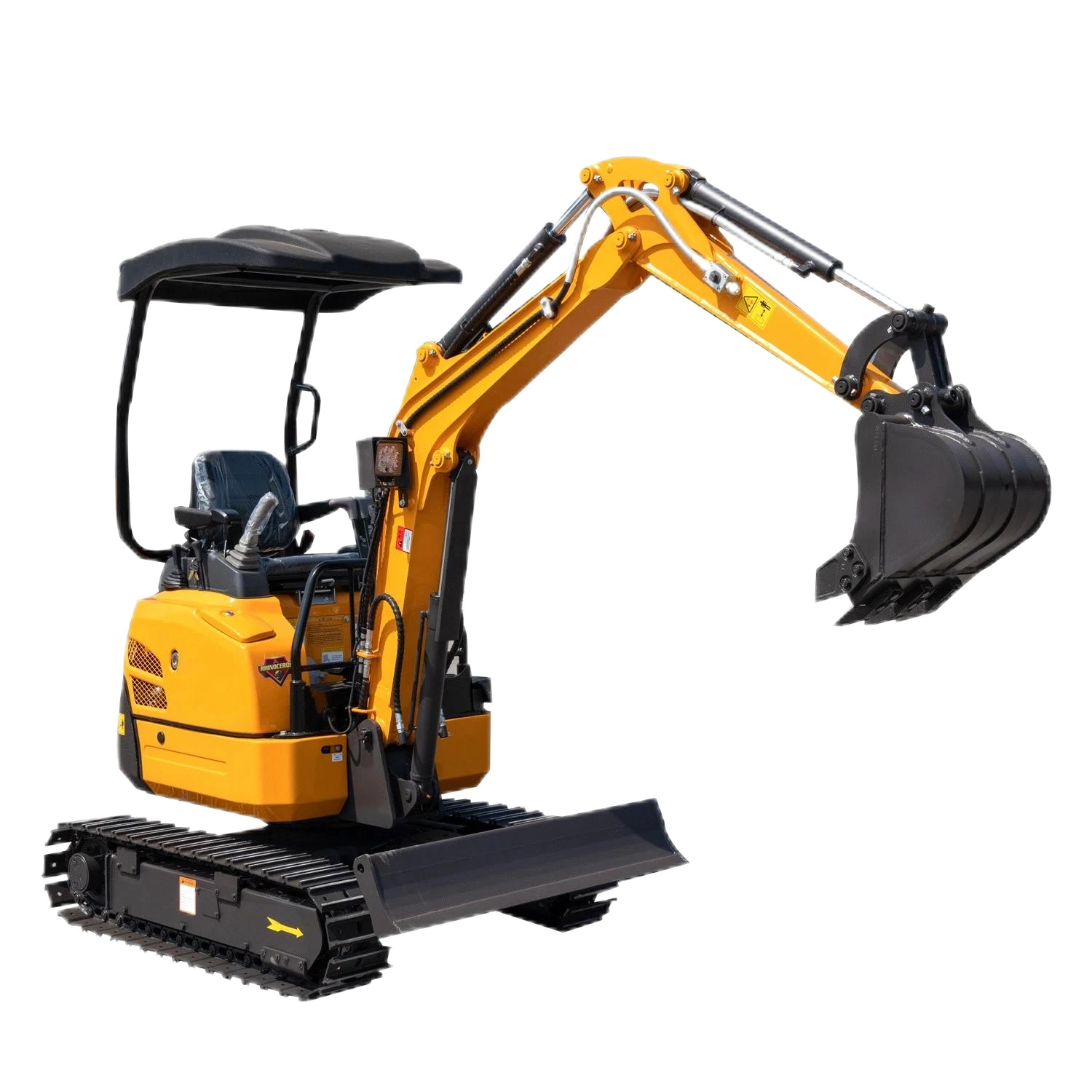

Mini excavators are moving into a period where the fuel question is a genuine fork in the road rather than a settled matter. Diesel machines remain the majority of the world's fleet for good reasons, but electric mini excavators have crossed from novelty to practical equipment — and in some job profiles they now win outright. The mistake buyers make is treating this as an ideology choice, buying "electric because it's the future" or refusing it because "diesel is proven." The right answer is site-specific, and it falls out of six practical factors.
Where Diesel Still Wins
Diesel remains the correct choice in a clear set of conditions. Remote sites without reliable power — road work, land clearing, agricultural jobs, rural construction — favor diesel because fuel arrives in jerry cans, while charging demands infrastructure that does not exist there yet. Continuous heavy duty also favors diesel: a machine digging all day at high hydraulic load draws battery energy faster than a single shift of charging comfortably replaces, and a diesel refuels in five minutes. And in markets where resale happens through general equipment dealers and used-machine buyers, diesel still enjoys the broader, more predictable second-hand demand.
Diesel also carries an emotional-operational advantage worth acknowledging honestly: operators and owners know its behavior — fuel burn per day, refuel stops, service rhythm — with a decade of personal data behind it. Electric requires recalibrating those instincts, and some teams simply need a transition period.
Where Electric Wins Decisively
The electric case is strongest exactly where diesel is weakest. Indoors and in enclosed demolition — basements, warehouses, tunnels, interior stripping — an electric mini excavator produces zero exhaust, which removes the ventilation, ducting, and fume-management overhead that diesel machines impose and in many jurisdictions simply cannot satisfy. Noise falls by a wide margin as well: an electric machine can work early mornings, evenings, and night windows in residential areas where a diesel's sound would trigger complaints or violate permit conditions.
Cities are tightening the noose on diesel equipment through low-emission zones and municipal procurement rules, and several European cities already restrict or surcharge diesel machinery on public sites. An electric mini excavator is not merely cleaner in those markets — it is increasingly the machine that is allowed through the gate. Add the operator experience (far lower vibration and noise in the cab) and the maintenance profile (no engine oil, filters, injectors, or DPF regeneration) and the urban contractor's math shifts further.
Charging Reality on Job Sites
The honest limiting factor for electric is energy logistics. A battery-powered mini excavator typically runs a working day — four to eight hours depending on load intensity — on one charge, and recharges overnight from a standard or industrial outlet, or opportunity-charges during breaks where power is available. Sites with grid power handle this trivially. Sites without power need a generator or a battery energy storage unit, which partly erodes the emissions and noise advantages.
The practical test for any buyer is concrete, not ideological: list your actual job sites, note which have power within cable reach, and note which jobs exceed one shift without interruption. If 80% of your work is powered sites and single-shift days, electric's charging reality is a non-issue. If half your work is remote backroads, diesel remains your backbone machine and one electric unit may serve the urban and indoor jobs as a specialized second machine.
Running Costs Over a Year
Energy cost per hour favors electric in almost every market — grid electricity per productive hour costs a fraction of diesel for the same hydraulic work, and the gap widens wherever diesel fuel is expensive or taxed. Maintenance compounds the advantage: no engine means no oil changes, no fuel filters, no exhaust after-treatment servicing, no injector problems, and regenerative braking reduces brake wear. Electric machines also start reliably in cold weather where diesels need glow plugs and patience, though battery performance itself degrades in deep cold — a consideration for winter-heavy climates.
Against those savings stands a higher purchase price for the battery machine, though the gap has been narrowing. The payback calculation is therefore site-mix dependent: a machine working daily in an emission-controlled city center can recover its price premium through fuel savings and access to jobs diesel cannot take, while a low-utilization machine in a remote area never reaches payback and should stay diesel.
Matching the Machine to the Fleet, Not the Fleet to the Machine
Most contractors do not need to choose once and forever. The pattern emerging in urban fleets is diesel retaining the heavy, remote, continuous-duty machines while electric takes the indoor, residential, and low-emission-zone work — often as a dedicated unit that rarely leaves those job profiles. If your work spans both worlds, that mixed approach captures the advantages of each and hedges the transition. If your work is entirely urban, entirely powered, and increasingly constrained by noise and emission rules, your next machine is probably electric, and your next three probably are.
Frequently Asked Questions
Q: How long does an electric mini excavator run on one charge?A: Typically a full working day — roughly four to eight hours — depending on battery capacity and digging intensity. Light trenching and utility work sit at the high end; continuous heavy loading at the low end. Overnight charging restores the pack for the next shift.
Q: Is an electric mini excavator powerful enough for real digging?A: Yes for the work mini excavators actually do — trenching, utility installation, landscaping, indoor demolition, light grading. Battery-electric drive delivers full torque instantly, and modern electric machines match their diesel equivalents in breakout force within the same weight class.
Q: What maintenance does an electric mini excavator eliminate?A: Engine oil and filter changes, fuel system service, exhaust after-treatment, injectors, and starter/alternator issues. Hydraulic system, tracks, pins, bushings, and attachment wear remain exactly as on diesel machines.
Q: Can it charge from a normal site power supply?A: Most electric mini excavators charge from single-phase household or standard industrial outlets overnight; some support faster three-phase charging. Confirm the charger specification with the supplier against the outlets your sites actually have.
Conclusion: the diesel-versus-electric decision is a site audit, not a philosophy debate. Score your work: if it is powered, urban, noise-sensitive, or indoors, electric wins on cost, access, and compliance; if it is remote, continuous, and unpowered, diesel remains the rational backbone. Tell us your job-site mix and daily hours, and we will recommend the specific configuration — including whether a mixed diesel-plus-electric fleet serves you better than committing to either.