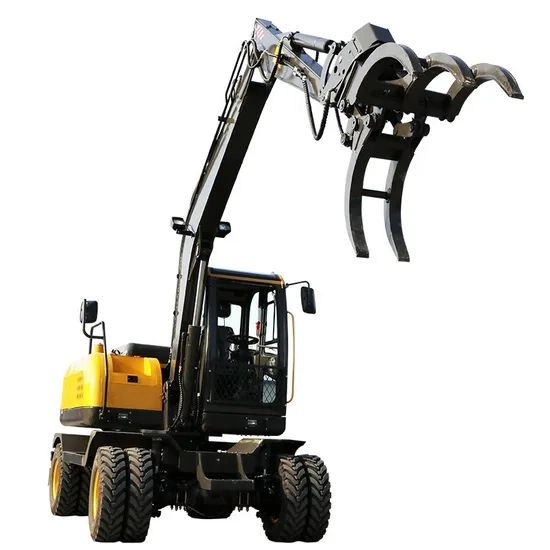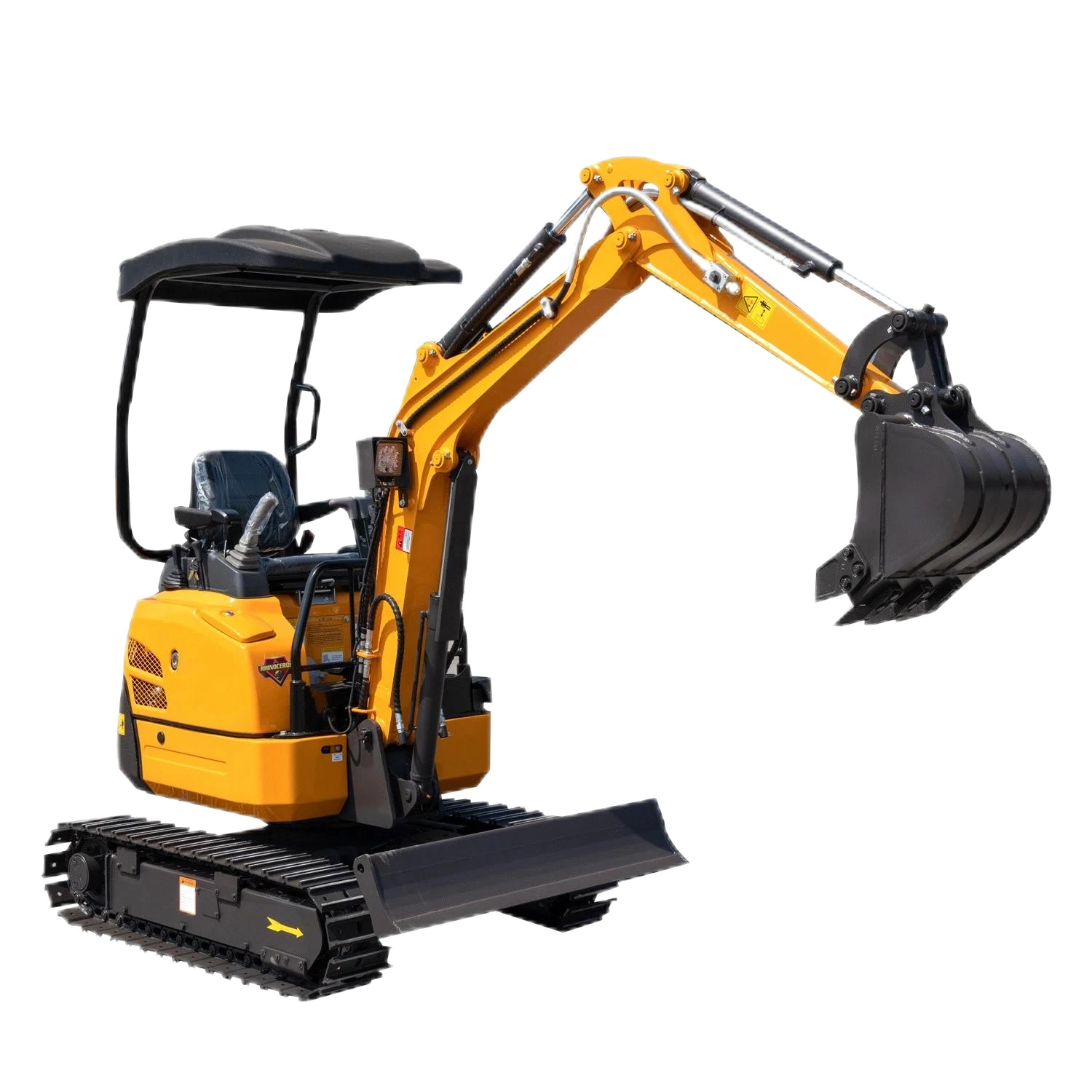

Five Core Overseas Competitive Advantages of China’s New Energy Forklifts & Mini Excavators
(All statistics backed by authoritative data; sources: China Construction Machinery Industry Association, General Administration of Customs of China, brokerage research reports and overseas field test data)
I. Advantages in Export Volume & Global Market Share (Industry Volume Statistics)
1. New Energy Forklifts
- Total export volume: China exported 327,700 forklifts in 2025, a year-on-year increase of 19.4%. Electric forklifts accounted for 68% of total exports at roughly 222,800 units, while lithium-ion forklift exports hit 280,000 units, surging 55% year-on-year. From 2016 to 2025, forklift exports registered a Compound Annual Growth Rate (CAGR) of 19.22%. China has retained the world’s top ranking in domestic forklift output and sales for 14 consecutive years.
- Global market share: Chinese-made lithium forklifts captured 35% of the global market share in 2025, up from merely 17% in 2020, doubling within five years. In Europe, the market penetration of domestic electric forklifts climbed from 3.2% (2020) to 8.1% (2025); Heli’s Germany-based facility posted a 45% year-on-year sales growth across Western Europe.
- Regional breakdown: Southeast Asia takes up 41.2% of electric forklift exports, the Middle East 22.7% and Latin America 15.9%. From January to February 2026, overall forklift exports rose by 22% year on year, with lithium-powered models exceeding 40% growth.
2. Mini Excavators (≤6 tons, including electric variants)
- Complete machine exports: China shipped out 116,739 excavators in 2025 (+16.06% YoY), among which 49,363 were mini excavators, making up 42.28% of total excavator exports. Cumulative export growth of domestic mini excavators reached 72% from 2021 to 2025.
- Brand landscape: In the global mini excavator market, Japanese brands (Kubota/Yanmar) hold 32%, European & American brands (Caterpillar/Volvo) account for 23%, and Chinese brands lead the pack at 45%. Domestic penetration rate of electric mini excavators hit 15% in 2026, with overseas penetration rapidly topping 9%.
- Regional growth: Countries along the Belt and Road Initiative absorb 76% of China’s mini excavator exports; African market sales jumped 62.51% year on year, and orders for residential landscaping mini excavators in North America grew over 70% annually.
II. Cost-Performance Edge on Purchase Price (Benchmarked against End-user Transaction Prices)
1. 2.5-ton Standard Lithium-ion New Energy Forklift
- Domestic unit price: USD 5,250 (approx. RMB 37,000). Equivalent Japanese electric models cost USD 7,200 apiece and European & American alternatives USD 9,800 per unit. Domestic purchase prices are 46.4% lower than Western brands and 27.1% cheaper than Japanese counterparts (2026 field quotation data from Industrial Truck Association, USA).
- 5-ton lithium forklift: Domestic price stands at RMB 280,000. Equivalent foreign-brand diesel forklifts cost RMB 220,000 and foreign lithium versions RMB 390,000, representing a 39.3% purchase premium for overseas lithium forklifts.
2. 1.5–3 Ton Electric Mini Excavators
- Domestic brand new FOB factory price: USD 5,000–6,500 per unit. Equivalent locally-manufactured new machines in the US cost upwards of USD 30,000, and matching Kubota Japanese models USD 18,000. Domestic pricing equals one-sixth of Western brands and one-third of Japanese products. Daily rental for mini excavators in Europe and America ranges from USD 200 to 300, meaning one month’s rental fee nearly matches the procurement cost of a brand-new Chinese mini excavator.
III. Total Cost of Ownership (TCO) Superiority over Full Lifecycle (Quantified Energy & Maintenance Data from Overseas Field Trials)
(1) 5-Year Full Lifecycle Comparison for New Energy Forklifts (2,000 operating hours annually)
| Cost Item | Domestic Lithium-ion Forklift | Foreign Equivalent Diesel Forklift | Cost Savings |
|---|---|---|---|
| 5-Year Energy Expense | RMB 98,000 | RMB 320,000 | RMB -222,000 (-69.4%) |
| 5-Year Maintenance Fee | RMB 72,000 | RMB 145,000 | RMB -73,000 (-50.3%) |
| Maintenance Interval | Scheduled maintenance every ≥1,000 working hours | Mandatory maintenance every 500 working hours | Over 60% cut in maintenance working hours |
Supplementary notes: Cumulative 8-year electricity cost for lithium batteries totals RMB 160,000 versus RMB 320,000 for lead-acid batteries. Domestic lithium batteries maintain over 80% discharge efficiency at -20°C, compared to only 50% for lead-acid cells, delivering an extra 12% energy-saving advantage in cold-climate European regions.
(2) Operation & Maintenance Data of Electric Mini Excavators
- Energy consumption: Diesel mini excavators burn 3.2–4 liters of fuel per operating hour; average diesel price in Europe and America hits USD 1.3/L, translating to USD 4.16–5.2 hourly fuel cost. Electric mini excavators consume 8–12 kWh per hour with regional power price at USD 0.12/kWh, costing merely USD 0.96–1.44 per hour and slashing hourly energy expenditure by more than 70%.
- Maintenance cost: Electric units dispense with engine, engine oil filter and air filter replacement. Annual maintenance expense is only 30%~35% of diesel-driven equivalents. Diesel models suffer 3 breakdowns per 1,000 operating hours while domestic electric versions register 0.8 failures per 1,000 hours, marking a 73% drop in failure rate.
IV. Cost Advantages from Complete Industrial Chain & Tariff Incentives (RCEP + Local Industrial Cluster Statistics)
1. Tariff Dividends under RCEP (Direct Export Cost Reduction)
- ASEAN market: With valid RCEP Certificate of Origin, import tariffs on forklifts and mini excavators fall from the conventional Most-Favored-Nation rate of 5%–10% down to zero. Indonesia previously imposed a standard 10% tariff on construction machinery; full tariff elimination under RCEP directly cuts equipment import cost by 10% of cargo value per unit.
- Japan, South Korea, Australia & New Zealand: Per RCEP provisions, import duties on Chinese construction machinery exported to Japan and South Korea drop progressively year by year, with zero tariff applicable to most product models starting from the third year post-implementation. In 2023, Liugong’s spare parts revenue from RCEP member nations rose 83% year on year, and finished machine sales to RCEP economies grew 60% (Source: China FTA Service Network).
- Domestic component import: RCEP slashes import tariffs on hydraulic and electronic control components for domestic construction machinery from 5.4% to 4.8%. Leading manufacturers save millions of RMB in annual import duties, trimming finished product production cost by an extra 1.2%~1.8% (Source: People.cn).
2. Domestic Industrial Cluster-driven Cost Reduction
- Forklift sector: Leading manufacturers including Hangcha, Heli and Noblift form an integrated industrial cluster in the Yangtze River Delta, with over 92% core components sourced locally. Delivery lead time shortens from 45–60 days for Western brands to just 7–15 days for domestic products, creating a 10%+ premium edge from faster lead times.
- Mini excavator sector: Jining, Shandong hosts 67 complete mini excavator manufacturers supported by a full industrial supply chain; engines, hydraulic systems and chassis achieve 100% domestic localization. Nearby component procurement cuts logistics cost by 8%~12%. Cross-border e-commerce overseas warehouses compress European & American delivery cycle from 50 days to 7 days, lowering logistics expense by 15%.
V. Edge in Lithium Battery Technology & Compliance with European & American Green Legislation (Carbon Neutrality Compliance Data)
China dominates the global lithium battery supply chain with over 70% of worldwide production capacity. LFP batteries fitted for forklifts and mini excavators cost 32% less than overseas ternary lithium alternatives. Domestic low-temperature lithium batteries retain ≥60% discharge capacity at -40°C, well-suited for frigid markets in Northern Europe and Canada. Custom low-temperature models for Central and Eastern Europe account for 60% of local orders, with regional exports up 28.6% from January to April 2026.
- EU market access bonus: The EU will ban sales of non-road diesel-powered machinery by 2035, and many urban construction sites across Europe and North America prohibit fossil-fuel construction equipment. Chinese new-energy machinery has pre-qualified for CE and EPA emission certifications, locking out diesel competitors from urban construction projects in Western markets; Europe stands as the world’s largest standalone market for electric construction machinery, absorbing 42% of global overseas electric equipment procurement.
- Added revenue from intelligent upgrade: Standard factory configuration includes remote fleet management and cloud-based battery monitoring systems. Exports of L3 autonomous intelligent forklifts surged 62% year on year in 2025; smart variants command a 25%~40% price premium over base models. Major European and American warehouse operators including Walmart and Bosch source intelligent lithium forklifts directly from Chinese suppliers.
VI. Comprehensive Conclusion (Quantified Summary)
A single 5-ton lithium forklift saves a total of RMB 295,000 over its 5-year full lifecycle versus foreign diesel counterparts; cumulative energy and maintenance savings for a 3-ton electric mini excavator over three years equal roughly 45% of its original purchase cost. Combined with zero-tariff benefits under RCEP and supply chain cost advantages, the overall full-lifecycle cost of Chinese new-energy construction machinery is 35%~50% lower than Western rivals, serving as the core quantitative driver behind its rapidly rising overseas market penetration.