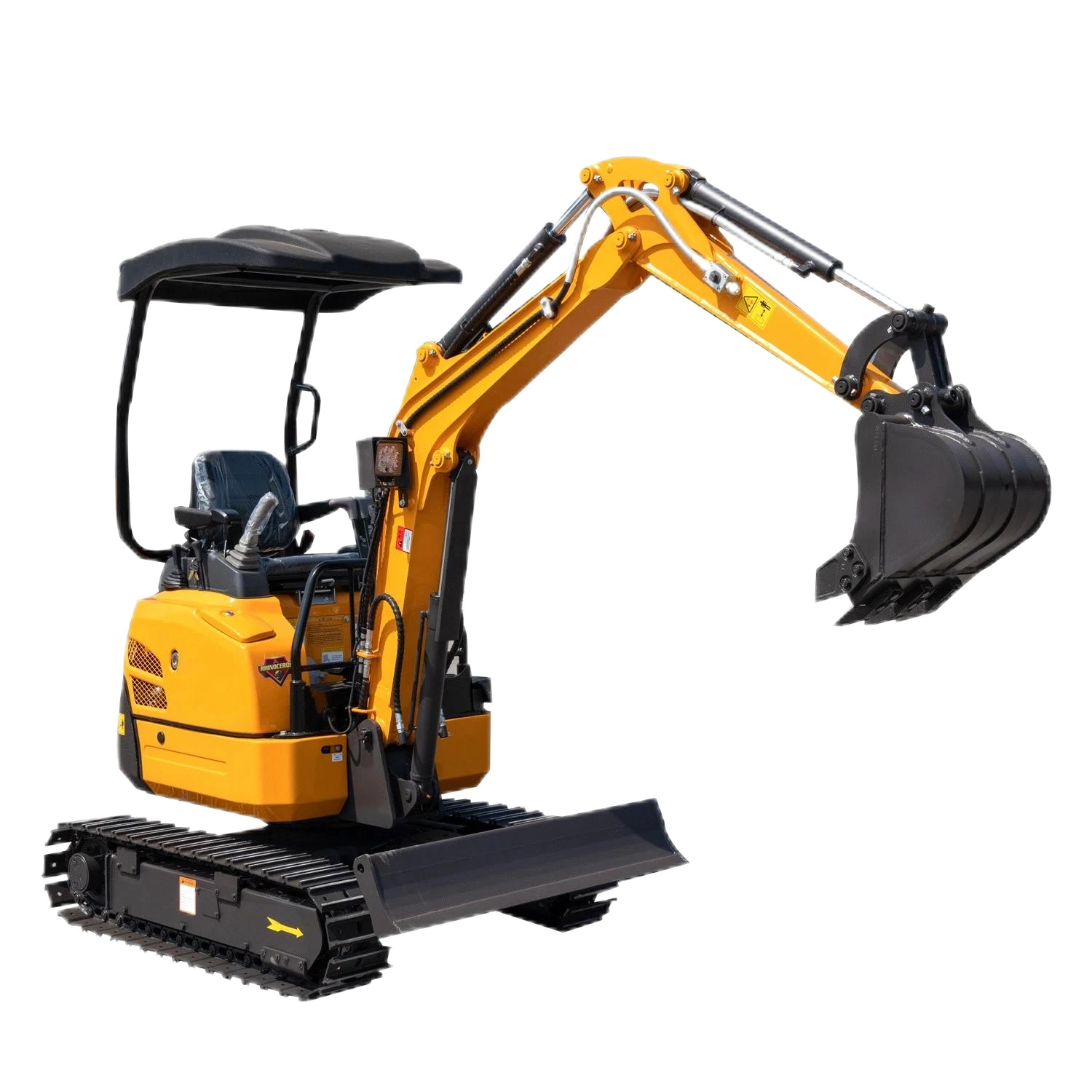

To ensure that a mini excavator is durable, reliable, and multifunctional for several years, there are three core principles: correct usage, timely maintenance, and avoiding excessive workloads. Here’s a practical guide to follow.
Usage: Don’t treat a mini excavator like a large one.
- Strictly prohibit overloading, prying, or pulling hard.
- The structure of a mini excavator is delicate; using the bucket to pry stones, lift heavy objects, or pull tree roots can seriously damage the arm, chassis, and hydraulic pump.
- If it can't dig, switch to a hydraulic hammer or tiller instead of forcing it.
- Avoid uneven stress and excessive lateral pulls.
- Mini excavators have a high center of gravity and light weight; avoid aggressive side dumping and working with one side suspended for long periods.
- When working on slopes, dig from the front rather than the side to prevent chassis deformation, track derailment, and premature wear of the support wheels.
- Use gentle movements; avoid sudden stops and sharp turns.
- Frequent abrupt stops, sharp turns, or sudden lifting of the arm can damage the hydraulic pump, multi-way valve, and oil seal.
- Mini excavators require light, steady, and slow operation—not brute force.
- Try not to work at full load for extended periods.
- Mini excavators dissipate heat poorly and have low strength; continuous high-intensity work can lead to overheating, cylinder stretching, and oil leaks.
- Work for 1 to 2 hours and take breaks to cool down.
Tracks and Chassis: Most prone to damage, so prioritize protection.
- Choose the right tracks to minimize wear.
- For sites with lots of gravel and debris, use steel tracks.
- For paved surfaces, lawns, and residential areas, use rubber tracks.
- Rubber tracks are particularly vulnerable to sharp stones and rebar, so avoid these as much as possible.
- Regularly clean dirt and stones from the tracks.
- Stones trapped between the track and support wheels can quickly wear out the tracks and damage the wheels.
- A quick clean at the end of each workday can double the lifespan of the tracks.
- Regularly check the tension.
- Tracks that are too loose can derail, while those that are too tight can burn out bearings.
- The ideal sag is about 1 to 2 fingers.
- Avoid sharp turns in place.
- Turning in place is hard on the chassis, wears the tracks, and damages the drive wheels.
- Try to move while turning.
Maintenance: Perform maintenance by the hour; it’s ten times cheaper than repairs.
- Use quality diesel; low-quality fuel can clog injectors.
- Do not mix hydraulic oils or use inferior oils.
- Allow the engine to idle for 3 to 5 minutes before working when starting cold.
- Change engine oil and filter every 250 hours.
- Clean the air filter every 50 to 100 hours in dusty environments; replace it after 200 hours.
- Change hydraulic oil return filter every 250 to 500 hours.
- Change hydraulic oil every 1000 to 1500 hours.
- Change gear oil (for travel motor and rotation) approximately every 500 hours.
- Check engine oil, coolant, and hydraulic oil.
- Look for any oil, water, or air leaks.
- Clean dust from the air filter surface.
- Daily (every day):
- By working hours (key maintenance):
- Tips to extend lifespan:
Environment and Parking: Reduce natural wear.
- Park on dry, level ground.
- Lower the arm instead of leaving it suspended.
- Disconnect the battery.
- Slightly raise the tracks to reduce long-term pressure deformation.
- Avoid prolonged exposure to sunlight and rain, as this can accelerate aging of wiring harnesses, rubber components, and oil seals.
- Wash off mud promptly after working in the rain or muddy conditions.
- Dried mud can seize rotation joints and oil cylinders, leading to oil seal leaks.
- When parking for long periods:
Attachments and Modifications: Avoid random additions.
- Choose a hydraulic hammer that matches the tonnage; using one that is too large can crack the arm and damage the hydraulic pump.
- Do not modify pressure or flow rates without authorization, as this can easily burn out the pump.
- Regularly check quick couplers; looseness can lead to oil leaks and damage to hoses.
Simple Summary (three core points):
- Avoid hard prying, lateral pulls, and excessive force.
- Change oil, clear stones, and check tracks on time.
- Do not let it perform heavy tasks beyond its tonnage. By adhering to these three points, a mini excavator can typically be used normally for 5 to 8 years without major repairs; otherwise, it may start leaking oil and becoming loose within 1 to 2 years.