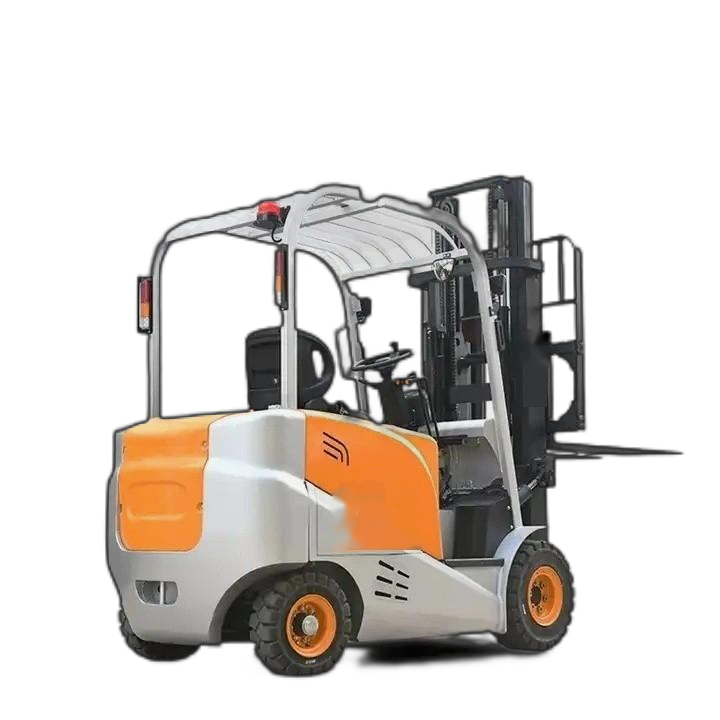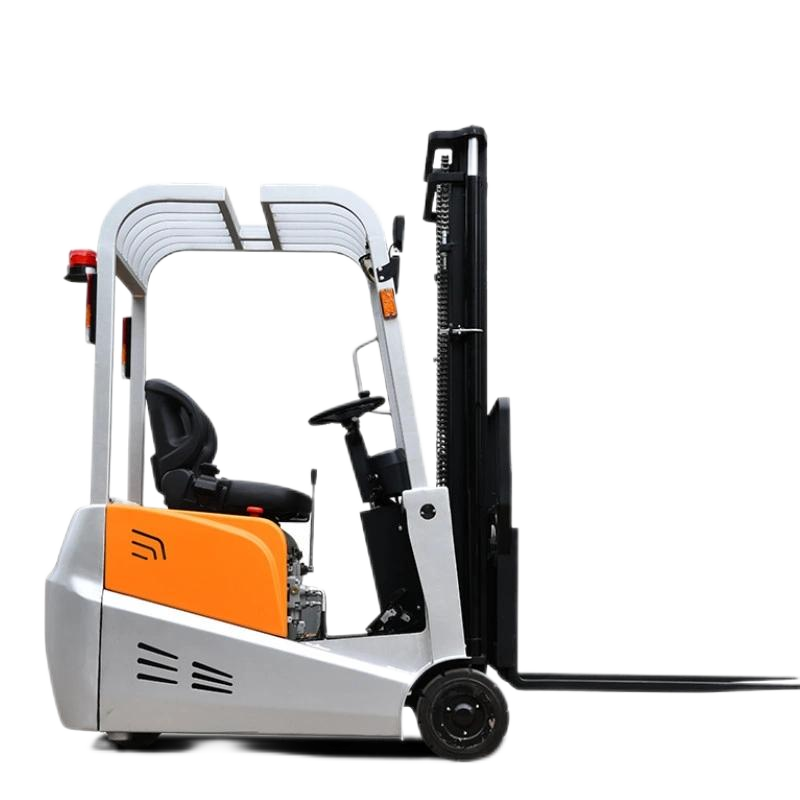

Electric forklifts are evolving from standalone equipment into intelligent logistics nodes, with core trends focusing on unmanned operation, connectivity, and system integration. The key approach for enterprises is as follows: conduct assessment first, then carry out pilot projects, implement systems in phases, build data capabilities, restructure management and services, and ultimately achieve the comprehensive goals of cost reduction, efficiency improvement, safety enhancement, and low-carbon operations.
I. Core Trends in Intelligent Electric Forklifts (2026)
- Large-scale Unmanned OperationAGV/AMR unmanned forklifts are growing at a rate of over 27%, expanding from closed warehouses to semi-open scenarios, with positioning accuracy reaching ±5mm.
- IoT Connectivity + Predictive MaintenanceRemote monitoring, battery health management, fault early warning, and AI-based maintenance have become standard features, shifting the model from "post-failure repair" to "pre-failure prevention".
- In-depth System IntegrationForklift scheduling (RCS) is integrated with WMS/MES/ERP systems, realizing collaboration among vehicles, cloud platforms, warehouses, and personnel.
- Intelligent Energy SolutionsLithium-ion, sodium-ion, and hydrogen energy technologies are developing in parallel, with high-voltage fast charging, battery swapping, and intelligent charging management becoming widely adopted.
- AI Safety & PerceptionMulti-sensor fusion (vision + laser + radar), pedestrian collision avoidance, driver behavior monitoring, and automatic braking are widely applied.
- Shift from Equipment Sales to Service SalesBilling by pallet or working hour, full-life-cycle operation and maintenance, and data value-added services have emerged as new profit drivers.
II. Enterprise Response: Phased Implementation Path (From Easy to Complex)
Phase 1: Current Status Assessment & Strategic Planning (1–3 months)
- Inventory forklift fleet and scenarios: collect data on forklift types, load capacities, working conditions, aisle dimensions, mixed human-vehicle traffic levels, and pain points (efficiency, safety, energy consumption, maintenance).
- Define objectives and ROI: set KPIs including efficiency improvement rate, accident reduction rate, energy consumption reduction rate, maintenance cost reduction rate, and labor savings.
- Select implementation paths:
- Lightweight retrofitting: install intelligent terminals, safety monitoring devices, and IoT modules on existing forklifts (low cost, quick results).
- Partial unmanned operation: pilot unmanned forklifts in fixed, repetitive, or high-risk scenarios (e.g., flat warehouses, narrow aisles, cold chain logistics).
- System restructuring: plan and build or renovate intelligent warehouses with integrated unmanned operation, scheduling, and WMS systems.
- Establish cross-functional teams: integrate logistics, IT, equipment, safety, and procurement departments to align goals and budgets.
Phase 2: Pilot Verification (3–6 months)
- Small-scale pilots: select 1–2 typical scenarios (e.g., finished goods outbound, raw material inbound) and deploy 3–5 intelligent/unmanned forklifts.
- Key selection criteria:
- Navigation: laser SLAM (flexible, no floor modification required), QR code (high precision, fixed paths), or visual navigation.
- Scheduling: support multi-vehicle collaboration, dynamic path planning, task prioritization, and WMS integration.
- Safety: AI collision avoidance, emergency stop, mixed human-machine safety protocols, and driver behavior monitoring.
- Energy: fast charging/battery swapping, battery management system (BMS), and energy consumption monitoring.
- Data benchmarking: compare KPIs before and after the pilot to verify return on investment (typically 12–24 months payback period).
- Team training: train operators, dispatchers, and maintenance personnel on intelligent equipment operation and emergency response.
Phase 3: Large-scale Deployment & System Integration (6–18 months)
- Phased expansion: roll out solutions gradually based on scenario maturity to avoid management chaos caused by full-scale replacement.
- Break down information silos:
- Connect forklift data to the Fleet Management System (FMS) for real-time monitoring of location, status, energy consumption, maintenance, and safety incidents.
- Integrate FMS with WMS/MES/ERP for automatic task assignment, inventory synchronization, and production rhythm coordination.
- Build digital twins: simulate operations, optimize paths, and identify bottlenecks in advance.
- Develop data capabilities:
- Data collection: location, operating hours, load, energy consumption, faults, collisions, and driver behavior.
- Data analysis: AI-driven predictive maintenance, efficiency bottleneck identification, safety risk assessment, and energy consumption optimization.
- Data application: dashboards, anomaly alerts, automated reports, and decision support.
Phase 4: Management & Business Model Upgrading (Long-term)
- Transformation of O&M model: shift from breakdown maintenance to predictive maintenance, reducing downtime by over 30%.
- Optimization of manpower structure: reduce pure operational positions and increase roles in scheduling, data analysis, O&M, and safety management.
- Innovative service models:
- Leasing or pay-per-use models to lower initial investment.
- Provide integrated intelligent logistics solutions, upgrading from equipment suppliers to service providers.
- Data value-added services: energy efficiency analysis, safety consulting, and process optimization.
- Talent development: cultivate or introduce interdisciplinary talents in logistics, IT, AI, and equipment, or build capabilities jointly with service providers.
III. Key Action List (Immediate Execution)
- Safety first: equip all forklifts with AI collision avoidance and driver behavior monitoring to control accidents and reduce risks.
- Data foundation: install IoT terminals on existing fleets to enable remote monitoring, energy consumption statistics, and maintenance early warning.
- Unmanned pilot: deploy unmanned forklifts in repetitive, fixed, high-risk scenarios (e.g., flat warehouses, narrow aisles, cold chain) to quickly verify value.
- System integration: connect forklift data with WMS/MES for automatic task allocation, dynamic path optimization, and real-time inventory synchronization.
- Energy upgrading: phase out lead-acid batteries and switch to lithium-ion or sodium-ion batteries, supported by fast charging, battery swapping, and intelligent charging management to cut energy consumption and boost efficiency.
- Organizational support: set up an intelligent logistics project team led by senior management with cross-departmental collaboration to ensure implementation progress and resource input.
IV. Pitfall Avoidance Guide
- Do not pursue full completion in one step: conduct pilots first before large-scale promotion to avoid heavy investment, high risks, and difficult implementation.
- Do not overemphasize hardware over software: the value of intelligent forklifts lies in system integration and data applications, with hardware only as a carrier.
- Do not ignore human-machine collaboration: adopt mixed human-machine operation and complementarity in the initial stage, and gradually increase the proportion of unmanned operation.
- Do not neglect operation, maintenance and training: intelligent equipment requires professional O&M and operational training, otherwise efficiency and safety will be compromised.
- Do not develop in isolation: intelligent forklift transformation must be planned in conjunction with warehouse layout, process optimization, and information systems.
V. Conclusion
The intelligentization of electric forklifts is not merely equipment upgrading, but a systematic restructuring of internal logistics. Enterprises should start with safety and data, verify through pilots, deploy in phases, integrate systems, and upgrade management, so as to ultimately achieve the core goals of cost reduction, efficiency improvement, safety and low-carbon operations, and gain a competitive edge in intelligent manufacturing and smart logistics.