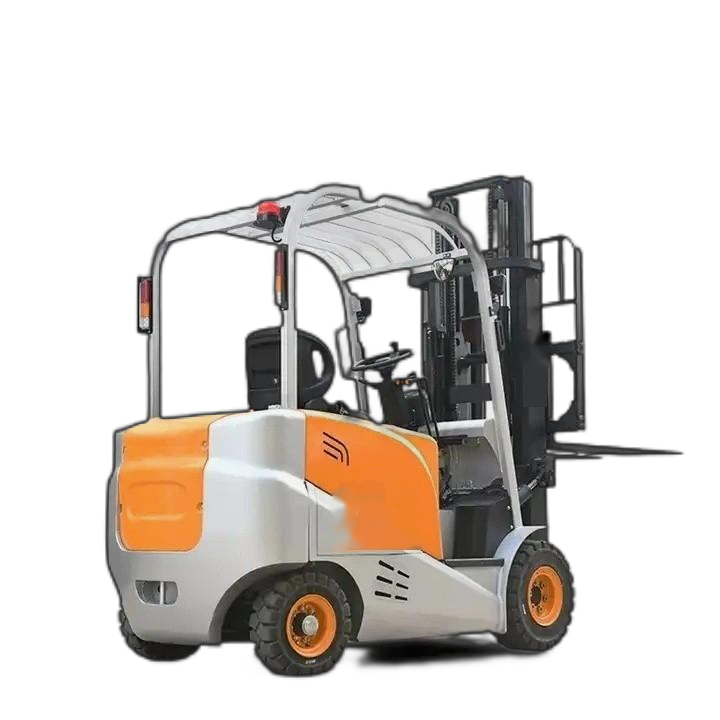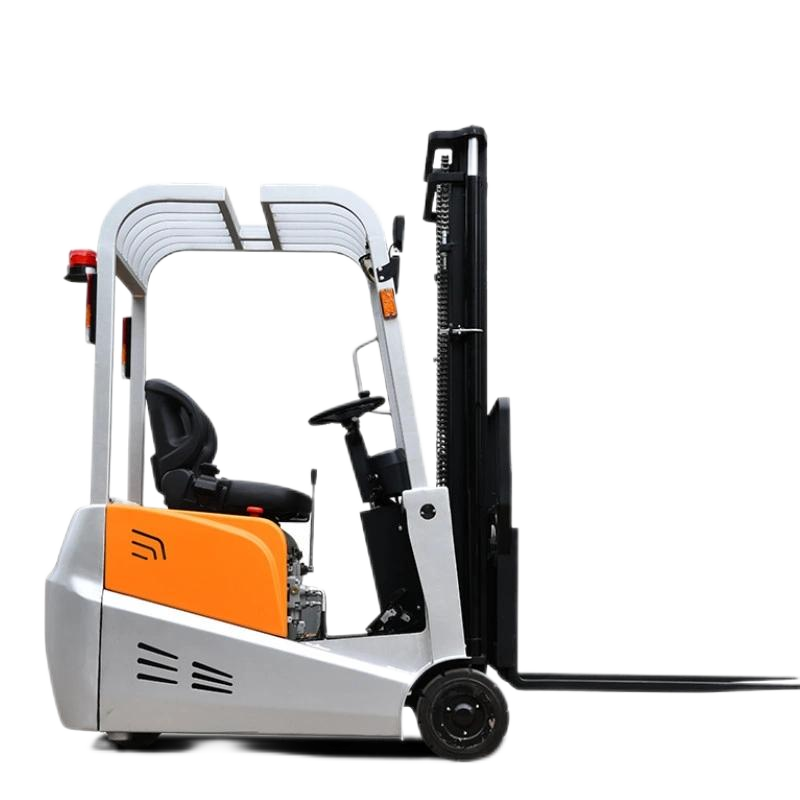

Electric forklifts not only promote sustainable development but are also becoming the core direction and inevitable trend of sustainable transformation in the industrial logistics sector. Their sustainability is supported comprehensively across four dimensions: environment, economy, technology, and policy, and they have entered a stage of rapid penetration and ecological improvement.
1. Core Sustainable Advantages (Dual Drive of Environment and Economy)
1.1 Environmentally Friendly: Reducing Carbon from the Source for Green Operations
- Zero Exhaust Emissions: No CO, NOₓ, or particulate matter pollutants during operation, completely solving indoor or enclosed space air pollution, suitable for high cleanliness scenarios such as food, pharmaceuticals, and electronics.
- Significant Carbon Reduction: A single 2-ton electric forklift operating 2,000 hours a year can reduce emissions by about 1.2 tons of CO₂ compared to the same tonnage internal combustion forklift, equivalent to the carbon sequestration effect of planting 67 trees. If powered by clean energy sources like wind or solar, it can achieve zero carbon throughout its lifecycle.
- Low Noise and Disruption: Operating noise is typically <65 decibels (internal combustion forklifts >80 decibels), significantly reducing operational noise pollution and operator fatigue.
- Resource Recycling: Lead-acid/lithium batteries can be recycled (lead recovery rate >95%, lithium material recycling systems are improving), reducing hazardous waste and resource waste.
1.2 Economically Sustainable: Lower Total Cost of Ownership (TCO)
- Low Energy Costs: High electricity conversion efficiency (>80%), no fuel consumption, and energy costs per operation reduced by 50%-70% compared to internal combustion forklifts.
- Low Maintenance Costs: Fewer moving parts (no engine, transmission, or exhaust system), no need for oil changes or filter replacements, leading to over 60% reduction in annual maintenance costs.
- High Long-term Returns: Initial purchase costs are slightly higher, but savings from energy consumption and maintenance can recoup the investment in 2-3 years, with total lifecycle costs (5-8 years) significantly lower than those of internal combustion forklifts.
2. Solid Foundation for Sustainable Development (Technology and Market)
2.1 Mature Technology: Breaking Bottlenecks, Fully Matching Internal Combustion Performance
- Battery Technology Iteration:
- Lithium Batteries: Fast charging (80% in 1 hour), long endurance (8-12 hours), no memory effect, and long lifespan (3000+ cycles) have become mainstream.
- Battery Swap Technology: Battery replacement completed in 3 minutes, completely addressing long operation endurance anxiety, suitable for ports and heavy-duty scenarios.
- Hydrogen Fuel Cells: Quick refueling (3-5 minutes) and long endurance, accelerating commercialization in heavy load, outdoor, and low-temperature scenarios.
- Energy Efficiency and Intelligence: Overall machine efficiency ≥82% (3-ton national standard), combined with energy recovery systems for further energy savings; IoT, predictive maintenance, and automation (AGV/AMR) enhance operational efficiency and equipment utilization.
2.2 Market and Policy: Driving Electric Penetration
- Market Explosion: In 2024, China's electric forklift sales reached 673,000 units, a year-on-year increase of 21.5%, accounting for 68.2% of total sales, with electrification shifting from policy-driven to market-led; Europe’s new forklift sales electrification rate exceeds 70%, entering a full replacement period globally.
- Strong Policy Promotion: The "dual carbon" strategy, non-road mobile machinery National IV/Euro V emission regulations, various local "oil-to-electric" subsidies, and mandatory replacement policies accelerate the elimination of high-emission internal combustion forklifts.
- Complete Industrial Chain: China has formed a complete industrial chain from batteries, motors, and electronic controls to complete machines, with significant scale effects, making domestic lithium electric forklifts globally competitive in cost-performance ratio.
3. Existing Challenges and Solutions (Key to Sustainable Development)
3.1 Main Challenges
- Infrastructure: Insufficient layout of charging/swapping stations in some scenarios affects large-scale promotion.
- Battery Recycling: The tiered utilization and closed-loop recycling system for lithium batteries are still under construction and require improved policies and business models.
- Extreme Conditions: Extremely cold or hot environments, heavy loads, and long outdoor operation scenarios impose higher requirements on battery performance and reliability.
3.2 Directions for Solutions
- Energy Supply Network: Promote the integrated construction of fast charging, battery swapping, and energy storage stations to meet different scenario needs.
- Circular Economy: Establish a closed-loop chain of "production - use - recycling - tiered utilization - material regeneration" to enhance resource utilization.
- Technological Diversification: Parallel development of lithium, hydrogen, and hybrid technologies to cover all scenario needs; continuous breakthroughs in cutting-edge technologies like solid-state batteries.
- Innovative Business Models: Shift from "sales" to "leasing + services + energy management" to reduce initial investment and operational risks for enterprises.
4. Future Trends: Moving Toward Full Lifecycle Sustainability
- Deepening Green Initiatives: Upgrading from "electrification" to "full lifecycle greening," covering low-carbon design, green manufacturing, clean energy, and recycling.
- Energy Diversification: Primarily lithium batteries, with hydrogen rapidly penetrating heavy load/long endurance scenarios, forming a multi-energy complementary pattern.
- Intelligent and Automated: Electric forklifts becoming intelligent logistics terminals, deeply integrating with WMS/MES to achieve automated, flexible, and low-carbon operations.
- Global Penetration: Chinese electric forklifts, leveraging technological and cost advantages, are accelerating overseas expansion, promoting sustainable transformation in global logistics equipment.
Conclusion
The sustainable development of electric forklifts has sufficient technological, market, policy, and economic feasibility, making it a core path to achieving the "dual carbon" goals in the industrial logistics sector. It is currently in a critical stage of transition from "replacement" to "dominance." With technological iterations, infrastructure improvements, and the establishment of a circular economy system, their sustainability will be further strengthened, making the complete replacement of internal combustion forklifts an inevitable trend.