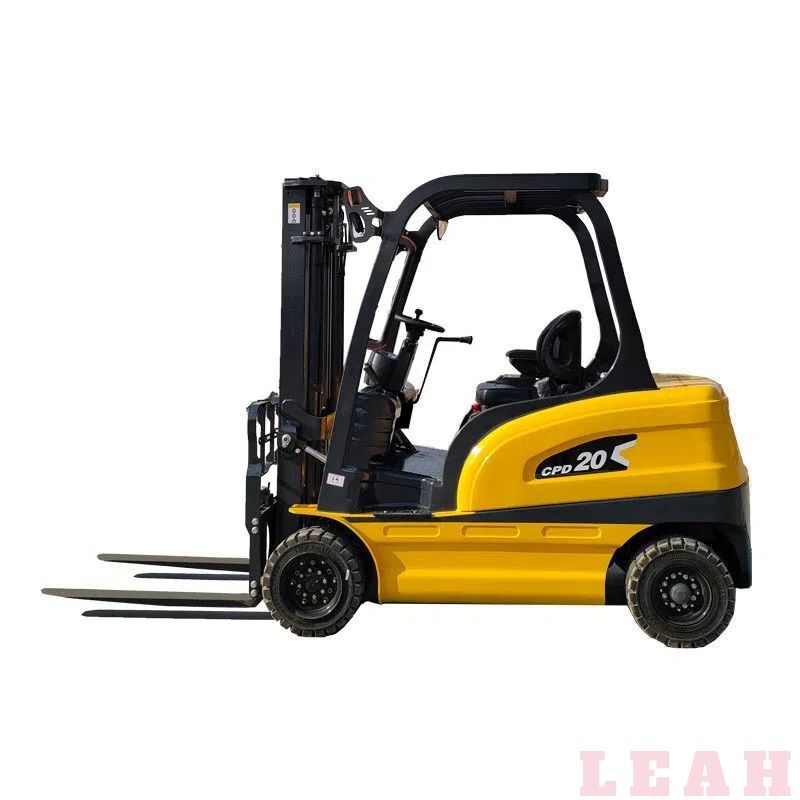
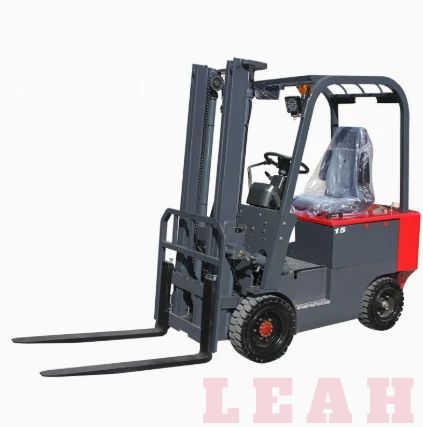
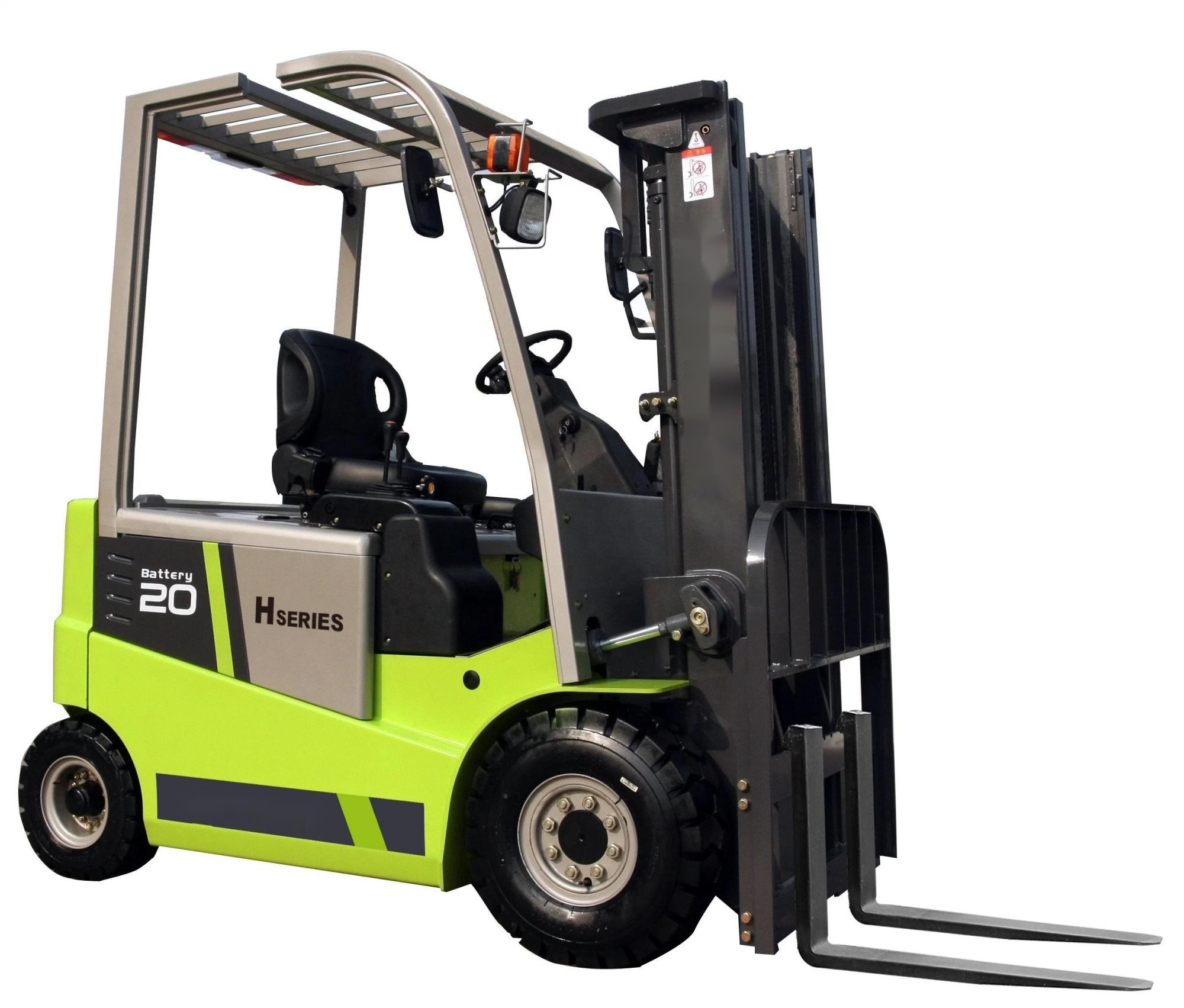
Safety Performance of Lithium Battery-Powered New Energy Forklifts
Combining the structural characteristics of
lithium battery forklifts, this document compares them with lead-acid battery forklifts and internal combustion forklifts, organized into five sections: Vehicle Operational Safety, Lithium Battery System Safety, Human-Machine Operational Safety, Environmental & Working Condition Safety, and Intelligent Active Protection. Objective boundary conditions are specified throughout.
I. Core Safety of Power Battery Systems (Greatest Differentiating Advantage)
Built-in Battery Management System (BMS) enables full-time monitoringThe BMS continuously collects cell voltage, temperature, balance status and insulation resistance, and delivers multi-level protection: automatic alarms, power limitation and power cutoff are triggered in cases of overcharging, over-discharging, overcurrent, excessive high/low temperature and excessive cell voltage difference to prevent thermal runaway of battery cells.Comparison: Conventional lead-acid batteries lack intelligent management and are prone to bulging caused by overcharging; internal combustion forklifts have no battery monitoring system at all.Sealed lithium battery pack eliminates electrolyte leakage risksMainstream supporting lithium iron phosphate (LFP) battery packs adopt fully sealed structures with no free sulfuric acid electrolyte. Unlike lead-acid batteries, they will not leak corrosive liquid that erodes forklift frames, floors and causes corrosive wastewater, mitigating risks of personnel burns, equipment corrosion and warehouse floor damage.No flammable and combustible gas emissionsLead-acid batteries produce hydrogen during charging, which may accumulate in enclosed warehouses and form explosion hazards.Internal combustion/LPG forklifts continuously discharge combustible exhaust gas.Lithium batteries generate no flammable gas under normal charge and discharge conditions, making them suitable for enclosed workshops, cold storage facilities and food processing plants.Impact resistance, dustproof and waterproof protection for batteriesIndustrial-grade lithium battery packs generally reach IP54/IP65 protection ratings with reinforced steel housings and shock-absorbing buffer structures. Risks of cell damage are reduced during forklift jolting and minor collisions. Most units are equipped with high-voltage insulation monitoring to rapidly disconnect high-voltage circuits in case of abnormalities.Supplementary Limitation: Thermal risks still exist if low-quality cells are adopted, the BMS malfunctions, or the battery pack sustains damage. Premium domestic lithium battery forklifts are standard-fitted with flame-retardant housings and thermal insulation cotton.
II. Vehicle Powertrain & High-Voltage Electrical Safety
Multi-layer isolation protection for high-voltage circuitsHigh-voltage wiring insulation protection and pre-charging function for high-voltage contactors. In the event of vehicle collision or severe tilting, the system can rapidly cut off high-voltage power to prevent electric leakage and short circuits.Smooth power output without sudden surgesMotor torque is linearly controllable. There is no idle vibration or uncontrolled acceleration issues found in internal combustion engines. The electronic control system limits starting impact and lowers risks of cargo toppling and vehicle collisions.Coordinated braking safetyStandard electronically controlled regenerative braking: braking force is automatically generated when the accelerator is released, paired with electromagnetic parking brakes that engage automatically upon stopping. The vehicle will not slide when parked on ramps, lowering risks compared with basic internal combustion forklifts susceptible to handbrake failure.No open flame hazardsThe vehicle eliminates engine exhaust pipes and high-temperature exhaust components, removing risks of sparks and high-temperature heat sources. It can operate in paper, textile, grain and light chemical semi-explosion-proof workshops (meeting overseas LEZ requirements and demands for explosion-proof workshops).
III. Operator & Human-Machine Safety
Low noise and low vibration reduce human-induced safety accidentsFree from persistent vibration and high decibel noise of internal combustion engines, operators experience less fatigue. Lower workshop noise allows staff to clearly hear vehicle horns and mutual warnings, mitigating collisions within blind zones.Zero exhaust emissions improve workplace safetyNo toxic exhaust such as carbon monoxide and nitrogen oxides. Poisoning risks caused by accumulated exhaust gas in enclosed warehouses are eliminated. Ideal for cold chain, food and pharmaceutical indoor warehouses, avoiding health hazards brought by exhaust from internal combustion forklifts.Lower heat radiationInternal combustion engines continuously dissipate heat, resulting in high cab temperatures in summer. Lithium battery forklifts generate minimal operational heat, offering a more comfortable cab environment and reducing operational errors caused by heat-induced driver fatigue.
IV. Safety Performance Under Complex Environmental & Working Conditions
Controllable operation under low-temperature conditionsHigh-end lithium battery systems are equipped with battery preheating modules to warm cells under low temperatures, preventing battery damage caused by high-power discharge in frigid environments and ensuring stable and safe operation in cold regions (a key demand for Nordic and North American markets).Note: Ordinary lithium batteries without preheating systems face restrictions under continuous high-load operation in extreme cold.Adaptable to enclosed indoor spacesNo strict ventilation requirements, an irreplaceable safety advantage over internal combustion forklifts.Stable continuous heavy-load operationVoltage decays gently, unlike lead-acid batteries whose power drops sharply as discharge proceeds. Stable power output during sustained heavy-load work avoids cargo lifting failures caused by insufficient power.
V. Intelligent Active Safety Configurations (Optional for Mainstream Domestic Lithium Battery Forklifts)
Intelligent speed limitation: automatic speed adjustment under no-load/loaded conditions; the maximum travelling speed declines as fork lifting height rises to prevent vehicle overturning when transporting elevated cargo at high speed.Blind spot warning & face recognition startup: unauthorized personnel cannot start the vehicle; power is automatically cut off and locked when the operator leaves the seat.Overload protection: lifting actions are restricted under overload conditions to avoid overturning caused by overloading.Tilt limit protection: the maximum mast tilt angle is restricted when forks are raised high to prevent cargo sliding.
VI. Objective Safety Boundaries (Essential for Business Communication to Demonstrate Professional Objectivity)
Lithium battery forklifts still require standardized charging; squeezing or puncturing battery packs is prohibited.Battery immersion in water and unauthorized disassembly of battery packs may trigger safety failures.Standard lithium battery forklifts are NOT equivalent to explosion-proof forklifts. Custom explosion-proof lithium battery versions are required for special high-risk chemical scenarios.
Condensed Summary
The safety advantages of
lithium battery forklifts are concentrated in: all-weather battery protection via intelligent BMS, zero flammable gas and toxic exhaust emissions, sealed batteries free of corrosive leakage, automatic high-voltage power cutoff upon system faults, smooth power output preventing impact accidents, regenerative braking plus automatic parking brakes to avoid vehicle sliding, low vibration and noise reducing fatigue-related incidents, as well as a full suite of intelligent protection functions. These features greatly mitigate common safety hazards in warehouse indoor operations including fire risks, staff poisoning and cargo overturning.