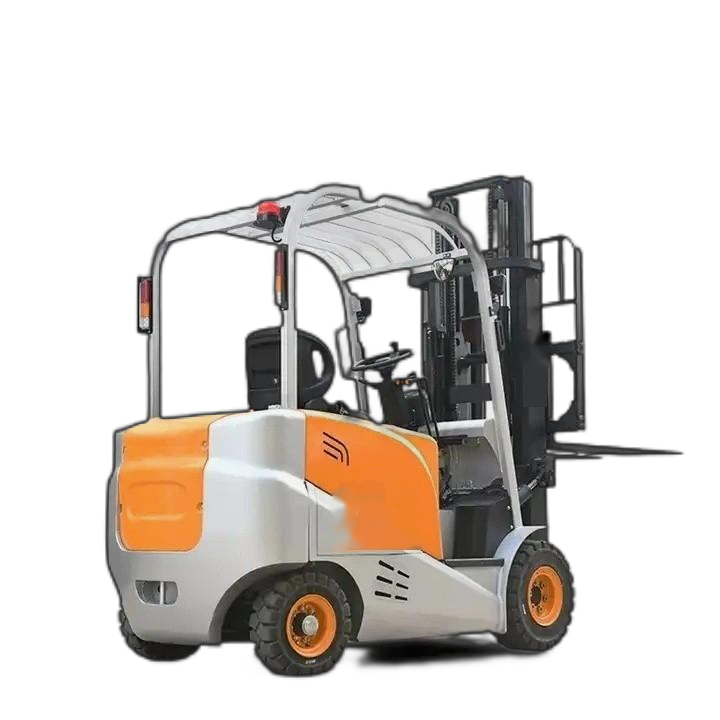
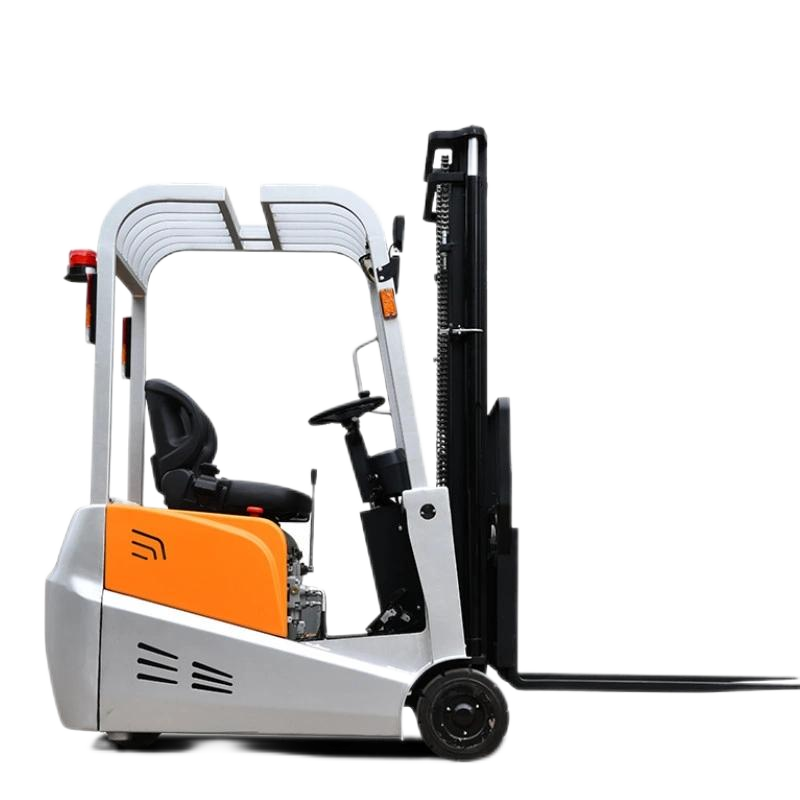
Systematic Solutions to Difficult Startup of Electric Forklifts in Winter
The core cause of
difficult startup of electric forklifts in winter lies in the multiple impacts of low temperatures on battery performance, hydraulic systems, and electrical circuits. A comprehensive solution should be constructed from four dimensions: Pre-treatment - Startup Operation - Root Cause Optimization - Emergency Plans, balancing immediate startup success and long-term reliability. Below are specific actionable technical solutions:
I. Pre-startup Pre-treatment: Eliminate Fundamental Barriers Caused by Low Temperatures
(1) Battery Activation
- Priority Battery Insulation: If the forklift is not equipped with factory-installed insulation, install a battery insulation cover (flame retardant grade V0, thermal conductivity ≤0.03W/(m·K)) or move the forklift to a warehouse above 10℃ for preheating 1-2 hours in advance. This prevents electrolyte freezing (lead-acid battery electrolyte freezing point ≈-15℃; lithium battery ≈-40℃), though ion migration rate drops sharply at low temperatures.
- Precise Charging Operation: Check battery voltage before startup (normal voltage: lead-acid battery cell ≥2.1V; lithium battery cell ≥3.2V). If voltage is below standard, use "low-current slow charging" (charging current = 0.1C of battery capacity, e.g., 5A for 50Ah battery) for 1-2 hours. High-current fast charging is strictly prohibited (may exacerbate internal polarization and reduce startup success rate).
- Enhanced Battery Maintenance: For lead-acid batteries, check electrolyte level (ensure 10-15mm above plates) and top up with distilled water if insufficient (tap water or dilute sulfuric acid is forbidden). Clean battery terminals: remove oxide layers with a brass wire brush and apply conductive paste (reduce contact resistance ≤0.01Ω) to prevent voltage drop during startup due to poor contact.
(2) Hydraulic and Transmission System Preparation
- Hydraulic Oil Preheating: If ambient temperature ≤-5℃, preheat the hydraulic oil tank (use a dedicated heater, 500-1000W, for 30-60 minutes) to reduce oil viscosity to 150-300mm²/s. Use low-temperature hydraulic oil (ISO VG 32 or VG 46, pour point ≤-30℃) in winter to avoid excessive pump startup load caused by high viscosity.
- Transmission System Inspection: For hydrostatic transmission forklifts:
- Check transmission oil level (normal level: middle of dipstick scale) and replace with low-temperature compatible oil (API GL-4 grade, viscosity 5W-30 or 10W-30).
- Manually adjust brake caliper clearance (brake shoes may seize due to low-temperature shrinkage) to ensure free wheel rotation without locking.
(3) Electrical Circuit Troubleshooting
- Insulation Resistance Test: Use a multimeter to measure main circuit insulation resistance (≥2MΩ is qualified). Focus on battery terminals, controller connectors, and motor junction boxes to prevent short circuits or poor contact caused by low-temperature-induced wire aging/cracking.
- Startup Component Testing:
- Inspect startup relay (pull-in voltage ≤12.5V) and contactor contacts (no ablation/oxidation). Polish poor contacts with fine sandpaper and apply conductive paste.
- Test motor no-load current (≤10% of rated current). Excessive current may indicate insufficient lubrication (replenish lithium-based grease, dropping point ≥120℃) or armature winding short circuit—disassemble for maintenance.
II. Standardized Startup Operation: Avoid Aggravating Faults via Improper Operation
- Step-by-Step Startup Process:
- Sudden full-throttle startup is strictly prohibited (may cause instant battery voltage drop or motor burnout).
- Turn the key to "ON" and wait 3-5 seconds (allow controller/relay self-check and battery voltage stabilization).
- Depress the accelerator pedal slowly (limit startup current to ≤1.5x rated current).
- Multiple Startup Limits:
- If startup fails, wait 2-3 minutes before retrying (allow battery voltage recovery).
- Maximum 3 consecutive attempts; pause and troubleshoot if unsuccessful—prolonged startup circuit activation is forbidden.
- Auxiliary Startup Taboos:
- Cross-starting with external power is prohibited (risk of controller/motor burnout due to voltage mismatch).
- If necessary: use an external battery with matching voltage, cables with cross-section ≥25mm² (reduce voltage loss), and limit cross-start time to ≤10 seconds.
III. Root Cause Optimization: Technical Modifications for Long-Term Winter Startup Reliability
(1) Battery Upgrade
- For forklifts operating at ≤-10℃: Replace standard lead-acid batteries with low-temperature lead-acid batteries (discharge rate ≥3C, low-temperature discharge capacity ≥70% of rated) or lithium batteries (lithium iron phosphate: ≥80%; ternary lithium: ≥90%).
- Install a battery heating system (PTC heater, 300-500W, temperature control 5-15℃).
(2) Hydraulic System Upgrade
- Add an automatic hydraulic oil preheater (activates when ambient temperature ≤5℃, linked to vehicle power).
- Replace with low-viscosity, high-fluidity hydraulic oil (e.g., Mobil DTE 10 Excel 32, pour point -42℃) to reduce startup hydraulic resistance.
(3) Electrical System Optimization
- Replace with cold-resistant wires (temperature range: -40℃~125℃) and seals (silicone rubber, cold resistance -50℃) to prevent low-temperature aging.
- Install insulation covers for key components (controller, motor) to reduce heat loss.
IV. Emergency Startup Plans: Address Sudden Startup Failures
(1) Emergency Battery Activation
- If battery voltage is too low: Parallel-connect a fully charged battery of the same voltage (positive to positive, negative to negative). Disconnect immediately after startup, recharge the original battery via the on-board charger during operation, and perform a full charge upon arrival.
(2) Mechanical Fault Emergency Handling
- Hydraulic oil viscosity issues: Manually rotate the hydraulic pump coupling (after power-off) and preheat the tank.
- Brake seizing: Loosen the brake cylinder bleed screw with a wrench to release partial pressure; drive slowly and gradually restore brake pressure after startup.
(3) Emergency Rescue Conditions
- Cease operation and contact professional maintenance if failures involve core components (motor burnout, controller malfunction, battery damage) to avoid fault escalation from improper disassembly.
V. Daily Maintenance: Foundational Measures to Prevent Winter Startup Difficulties
(1) Daily Inspection Checklist
- Battery: Check voltage (standing voltage ≥24V/48V/80V for corresponding forklift models) and electrolyte level (lead-acid batteries).
- Fluids: Inspect hydraulic/transmission oil levels and leaks.
- Systems: Test brake flexibility and electrical connections—address issues promptly.
(2) Regular Maintenance Cycles
- Every 150 hours (or monthly): Replace hydraulic oil filter and air filter.
- Every 300 hours (or quarterly): Inspect motor bearing lubrication and controller cooling fan operation.
- Pre-winter (temperature ≤5℃): Complete full-vehicle low-temperature adaptation maintenance—replace non-compliant fluids and filters.
(3) Parking Environment Management
- Prioritize indoor parking (temperature ≥5℃). For outdoor parking: Cover with a waterproof insulation cover and add extra insulation for the battery.
- Ensure the battery is fully charged (≥80%) before parking—avoid prolonged storage in a discharged state (risk of permanent sulfation in low temperatures).