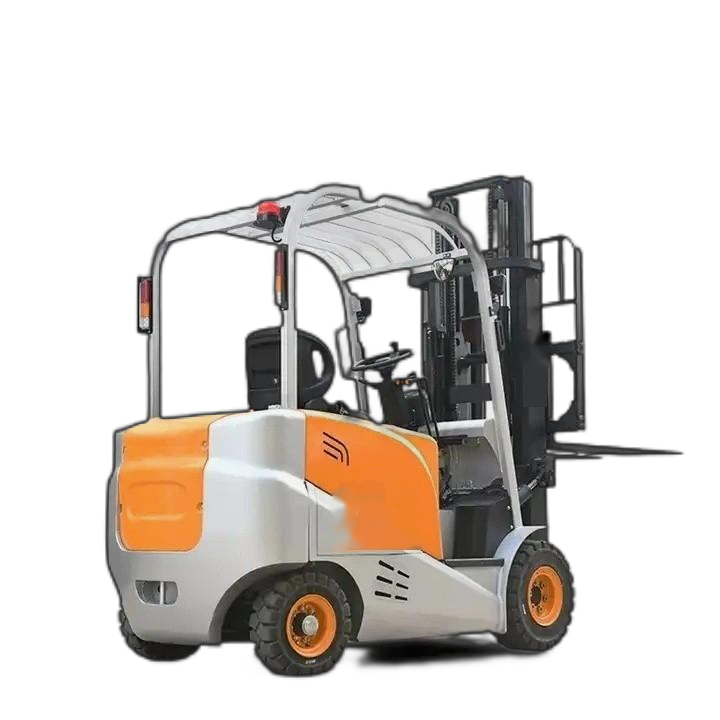
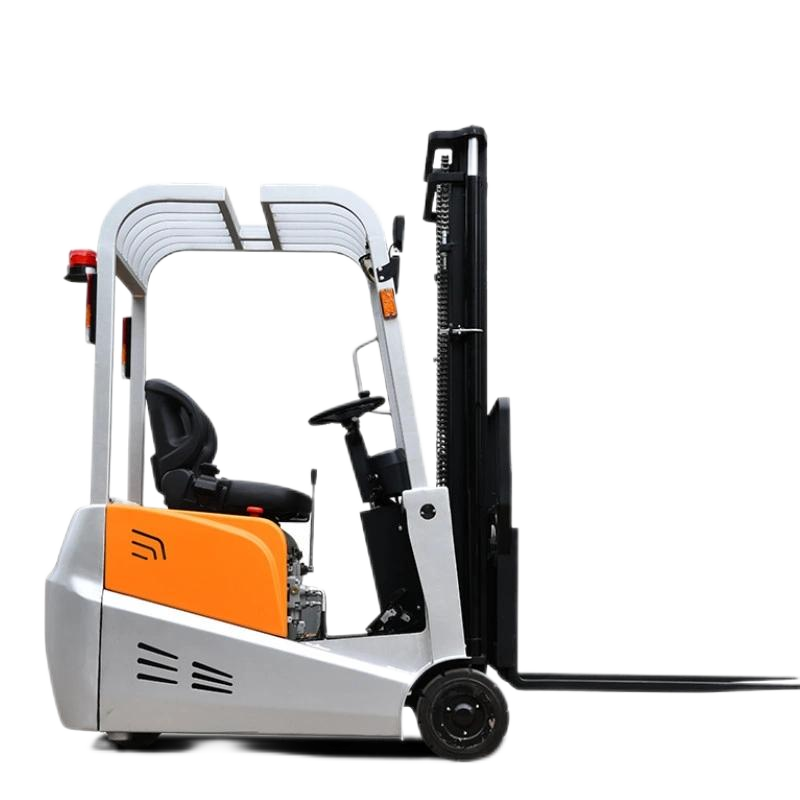
As a core equipment in industrial logistics, the
safety protection design of 3-ton electric forklifts covers the entire process of "active prevention - process control - emergency protection". The following content elaborates on six core dimensions (core protection systems, active safety, passive safety, electrical safety, operating environment adaptation, and compliance monitoring) combined with quantitative standards and practical requirements, which can be directly applied to equipment selection, daily inspection, and safety training:
I. Core Safety Protection Systems (Basic Guarantee, Mandatory Compliance)
1. Load and Stability Protection (Core for Preventing Overloading/Rollover)
Rated Load Limiter:
- Function: When the fork load exceeds the 3-ton rated value (±5% error), it immediately triggers an audible and visual alarm, cuts off the lifting action (hydraulic system pressure relief), and prohibits overloading operations.
- Quantitative Standards: Load sensor accuracy ≤ ±2%, alarm response time ≤ 0.5 seconds, calibration required once a year (third-party test report to be retained).
Rollover Stability System:
- Lateral Stabilizer: Rigid stabilizing wheels are installed on both sides of the frame. When the vehicle body tilt angle exceeds 3° (unloaded)/2° (loaded), the stabilizing wheels touch the ground for support to prevent rollover.
- Longitudinal Load Limitation: When the fork lifting height ≥ 1.5 meters, the forward tilt angle is automatically limited (≤3°) to avoid cargo sliding; the normal forward tilt angle (≤10°) can be restored when descending below 0.5 meters.
Fork Safety Lock:
- The fork positioning pin shall have an anti-disengagement design, with a locking force ≥ 5kN after insertion to prevent fork displacement during operation; fork replacement requires two-person operation, and it can be used only after confirming that the locking is in place.
2. Brake and Travel Safety Protection (Controlling Movement Risks)
Dual-Circuit Brake System:
- Service Brake: Electromagnetic brake/hydraulic brake, braking distance ≤ 3.5 meters (loaded, speed 10km/h), brake pedal stroke 20-50mm (daily inspection required).
- Parking Brake: Mechanical interlocking type, reliable locking after pulling the lever, parking force ≥ 15kN, maintaining braking even in power/off-pressure state, no sliding when parking on slopes (≤15%).
- Emergency Brake: A red emergency stop button is installed under the steering wheel. Pressing it immediately cuts off the power supply and links the service brake, with a response time ≤ 0.3 seconds.
Speed Limitation and Buffering:
- Lifting/Lowering Speed Limit: Fork lifting speed ≤ 0.5m/s, lowering speed ≤ 0.3m/s (consistent for unloaded/loaded) to avoid impact loads.
- Turning Speed Limit: When the turning radius ≤ 2.5 meters, the speed is automatically reduced to ≤5km/h; maximum straight-line speed ≤12km/h (indoor)/15km/h (outdoor), and some models support custom speed thresholds.
II. Active Safety Protection (Early Warning, Risk Avoidance)
1. Environmental Perception and Alarm System
Audible and Visual Warning Devices:
- Travel Buzzer: Volume ≥ 85dB (at 1 meter), automatically switches to "Caution: Reversing" voice prompt when reversing, cannot be turned off; turn signal and brake light brightness ≥ 200cd, visible within 30 meters.
- Blind Spot Warning: Ultrasonic sensors (detection distance 0.5-3 meters) are installed on both sides of the vehicle body (behind the forks). Hierarchical alarms are triggered when obstacles are detected (audible and visual prompts at 1-3 meters, cutting off forward/reverse power at ≤0.5 meters).
Vision Optimization Design:
- The overhead guard adopts a grid structure (grid spacing ≤50mm) without blocking the driver's upper vision; the fork carrier is equipped with a transparent anti-slip load backrest to reduce cargo blocking the front view.
- Some high-end models are equipped with a reversing camera (resolution ≥720P) + in-cab display screen, which displays real-time rear images, and the effective distance of infrared fill light at night is ≥5 meters.
2. Operational Behavior Restriction Protection (Preventing Misoperation)
Driver Safety Interlock:
- Seat Sensor Switch: When the driver is not seated (pressure ≥50kg), lifting, forward tilting, and backward tilting actions are all locked, only allowing low-speed (≤3km/h) movement.
- Pedal Interlock: The forward/reverse gear cannot be switched unless the brake pedal is fully depressed; gear switching requires three-step operation: "press brake - shift gear - release brake" to prevent misgearing.
Misoperation Protection:
- Lifting/lowering buttons shall have an anti-mis-touch design (protrusion height ≥5mm, effective only when fully pressed); an "emergency stop reset" key is installed on the left side of the steering wheel, and manual reset is required to restart after triggering the emergency brake.
III. Passive Safety Protection (Reducing Injuries After Accidents)
1. Driver Protection
Overhead Guard (ROPS):
- Material: Q355B high-strength steel, frame bearing capacity ≥10kN (top vertical load), ≥8kN (side horizontal load), complying with ISO 6055 standard.
- Protection Range: Covers the driver's head and upper body, frame spacing ≤120mm without affecting operational vision; a sun/rain shelter can be installed on the top (without changing the structural strength of the overhead guard).
Seat Belt and Anti-Fall Devices:
- Three-point seat belt (webbing strength ≥2.2kN) with automatic locking function; an audible and visual alarm is triggered if the seat belt is not fastened during driving; an anti-slip pedal (groove depth ≥2mm) is installed under the seat to prevent foot slipping.
Buffer Protection:
- Anti-collision rubber strips (thickness ≥50mm, Shore A hardness 60-80) are installed at the front and rear of the vehicle body to absorb the impact force of minor collisions; the driver's seat is equipped with a shock-absorbing pad (buffer stroke ≥10mm) to reduce bump injuries.
2. Cargo and Equipment Protection
Load Backrest:
- An adjustable load backrest (height ≥1.2 meters, thickness ≥3mm) is installed above the forks to prevent cargo from sliding backward; the distance between the load backrest and the forks ≤150mm, which can be adjusted up and down according to the cargo height (must be locked after adjustment).
- For special working conditions (such as transporting fragile goods), a protective net (mesh size ≤50mm×50mm) can be added to enhance protection.
Hydraulic System Explosion-Proof Protection:
- Hydraulic hoses adopt high-pressure steel wire braided hoses (working pressure ≥25MPa), equipped with safety relief valves with burst pressure ≥75MPa to prevent cargo falling due to hose rupture; the hydraulic oil tank is equipped with a liquid level alarm (alarm when 10% below the minimum liquid level) to avoid system damage caused by lack of oil.
IV. Electrical Safety Protection (Exclusive to Electric Forklifts, Preventing Electric Shock/Fire)
1. Battery Safety
Lithium Battery Protection (Mainstream Configuration):
- Overcharge/Overdischarge Protection: BMS (Battery Management System) monitors voltage in real time (cell voltage 3.2-3.65V), automatically cuts off the charging/discharging circuit during overcharge/overdischarge; temperature protection (operating temperature -10℃~45℃), triggers power-off and alarm when exceeding 50℃.
- Explosion-Proof Design: The battery pack adopts IP67 protection level (dustproof and waterproof), equipped with a pressure relief valve (burst pressure 0.3MPa) to prevent explosion during battery thermal runaway; smoking and stacking flammable and explosive materials near the battery are prohibited.
Lead-Acid Battery Protection:
- The battery box is equipped with vents (to prevent hydrogen accumulation), and the filling port has an anti-leakage design; the ventilation cover must be opened during charging, and a dry powder fire extinguisher (MFZ/ABC 4kg) must be equipped in the charging area.
2. Circuit Safety
Double Insulation and Grounding:
- Electrical components such as motors and controllers adopt double insulation design (insulation resistance ≥1MΩ), and the shell grounding resistance ≤4Ω; cables use flame-retardant materials (VW-1 grade) with IP54 protection level (dust and splash water prevention).
Short Circuit Protection:
- The main circuit is equipped with an air switch (rated current ≥1.2 times the motor rated current), which trips within 0.1 seconds in case of short circuit; the control circuit is equipped with a fuse (fusing current ≤5A) to prevent damage to the control module.
Leakage Protection:
- Equipped with a leakage protector (operating current ≤30mA, operating time ≤0.1 seconds), which immediately cuts off the power supply when leakage is detected; the test button (TEST key) must be pressed monthly to verify the effectiveness of protection.
V. Operating Environment Adaptation Protection (Enhanced for Special Working Conditions)
1. Indoor/Confined Space Protection
- Low Noise Design: Operating noise ≤75dB (at 1 meter), complying with GB/T 27544 standard to protect operators' hearing;
- Zero Emission: Electric forklifts have no exhaust emissions, and can be directly used in clean places such as food workshops and pharmaceutical warehouses; some models are equipped with a CO₂ concentration sensor (detection range 0-5000ppm), which alarms and forces ventilation when exceeding the standard.
2. Outdoor/Harsh Environment Protection
- Waterproof and Dustproof: The overall vehicle body protection level ≥IP54, battery pack/controller protection level ≥IP67, can operate in light rain and dusty environments (prohibited in heavy rain);
- Low Temperature Protection: Lithium batteries are equipped with heating function (automatically activated when the ambient temperature ≤-10℃) to ensure discharge efficiency ≥80%; the hydraulic system uses anti-freezing hydraulic oil (applicable temperature -20℃~60℃) to avoid low-temperature solidification.
3. Explosion-Proof Working Condition Protection (Such as Chemical Warehouses)
- Explosion-Proof Grade: Must comply with Ex II BT4 or Ex IIC T4 standards, and components such as motors, controllers, and switches are all explosion-proof designed;
- Static Protection: The vehicle body is equipped with a static grounding device (grounding resistance ≤10Ω), and the grounding must be confirmed to be good before operation; plugging and unplugging electrical connectors in explosion-proof areas is prohibited.
VI. Compliance and Monitoring Protection (Whole-Life Cycle Traceability)
1. Safety Certification and Marking
Essential Certifications:
CE (EU), CCC (China), ISO 6055 (international forklift safety standard); the equipment nameplate must clearly mark the rated load, self-weight, and safety certification number;
Safety Markings:
Markings such as "No Overloading", "Fasten Seat Belt", and "Caution Blind Spot" must be affixed to the vehicle body (font size ≥20mm, red/yellow contrasting colors), and worn markings must be replaced in a timely manner.
2. Condition Monitoring and Early Warning
On-Board Diagnostics (OBD):
Real-time monitors 16 key parameters such as brake system, battery voltage, and hydraulic pressure; displays fault codes on the instrument panel when abnormal (e.g., "E01 - Brake Fault", "E02 - Battery Overheating"), and automatically records fault time and working conditions (exportable for traceability);
Regular Inspection Items (Daily/Weekly/Annual):
| Inspection Cycle | Core Items | Judgment Standards |
|---|
| Daily | Brake performance, seat belt, audible and visual alarm, battery voltage | Braking distance ≤3.5 meters, seat belt without damage, normal alarm, voltage within rated range |
| Weekly | Hydraulic system leakage, overhead guard tightness, tire wear | No dripping, bolt torque ≥30N・m, tire tread depth ≥3mm |
| Annual | Load limiter calibration, overhead guard strength test, electrical insulation test | Load error ≤±2%, no deformation of overhead guard, insulation resistance ≥1MΩ |
VII. Summary of Core Protection Logic
The safety protection of
3-ton electric forklifts is centered on "prevention first, hierarchical protection":
- Block dangerous sources through "load limitation + speed control + interlocking operation";
- Early warning of risks through "environmental perception + audible and visual alarm";
- Reduce accident injuries through "overhead guard + seat belt + anti-collision design";
- Avoid electric equipment-specific risks through "electrical explosion-proof + battery protection".
During selection, focus on verifying safety certifications and core protection component parameters (such as braking distance, overhead guard strength); strictly implement the inspection system during daily use, and prohibit removing/shielding safety devices (such as privately disconnecting the seat belt alarm) to ensure safety and compliance throughout the life cycle.