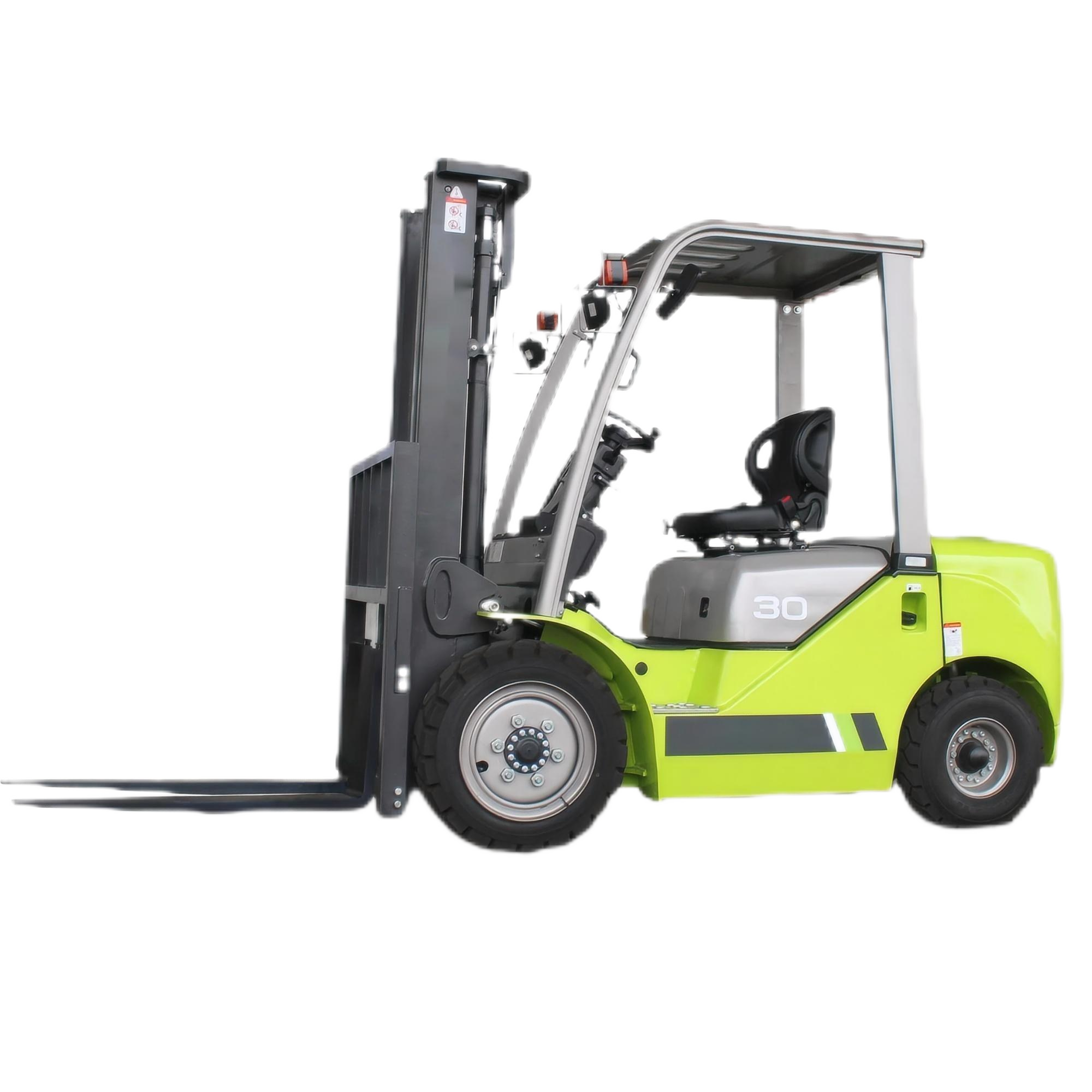
In essence, a lithium-ion battery-powered electric forklift is an electric forklift that replaces the traditional lead-acid battery with a lithium-ion battery pack. Its core operating logic (control, transmission, and hydraulic systems) is consistent with that of ordinary electric forklifts, but it has significant improvements in energy supply efficiency, endurance, and service life.Its core advantages and key information can be divided into the following three modules for your quick understanding.
1. Core Advantages: Key Improvements Compared with Lead-Acid Battery Forklifts
The characteristics of
lithium-ion batteries directly determine the performance upgrade of forklifts, mainly reflected in four aspects:
- Faster Charging: Adopting fast-charging technology, it can be fully charged in 1-3 hours, which is much faster than the 8-10 hours required for lead-acid batteries; some models support "charging while in use", eliminating the need to wait for complete discharge, and can be recharged during fragmented time.
- Longer Endurance: With the same capacity, lithium-ion batteries have higher energy density, and the actual endurance range is 15%-30% higher than that of lead-acid batteries; moreover, the discharge process is more stable, avoiding the "sudden drop in late-stage endurance" that occurs with lead-acid batteries.
- Longer Service Life: The cycle life can reach 2,000-3,000 times, which is 2-3 times that of lead-acid batteries (500-800 times); under normal use, the service life of lithium-ion batteries can reach 5-8 years, reducing the frequency and cost of battery replacement.
- Lower Maintenance Costs: Unlike lead-acid batteries, which require regular water refilling and electrolyte adjustment, lithium-ion batteries only need regular cleaning of battery interfaces; in addition, lithium-ion batteries are lighter (30%-50% lighter than lead-acid batteries of the same capacity), which can reduce the forklift’s own energy consumption and facilitate later replacement.
2. Key Considerations: Points to Know Before Model Selection and Use
- Higher Initial Cost: The purchase cost of a lithium-ion battery pack is approximately 2-3 times that of a lead-acid battery, resulting in a larger upfront investment. However, in the long run (calculated based on a 5-year service life), the comprehensive maintenance and replacement costs are lower.
- Dedicated Charger Required: A dedicated charger for lithium-ion batteries must be used; mixing it with a lead-acid battery charger is not allowed, otherwise it may cause battery damage or safety risks.
- Safety Protection Requirements: Although lithium-ion batteries are equipped with overcharge, over-discharge, and short-circuit protection, severe collisions or high-temperature environments should still be avoided; some models are additionally equipped with a battery temperature control system, making them suitable for low-temperature (e.g., cold storage) or high-temperature working conditions.
3. Comparison of Core Parameters Between Lithium-Ion Battery Forklifts and Lead-Acid Battery Forklifts
The table below intuitively shows the differences between the two, providing a reference for model selection:
| Comparison Dimension | Lithium-Ion Battery-Powered Electric Forklift | Traditional Lead-Acid Battery-Powered Electric Forklift |
|---|
| Charging Time | 1-3 hours (fast charging) | 8-10 hours (slow charging) |
| Cycle Life | 2,000-3,000 times | 500-800 times |
| Weight (Same Capacity) | Lighter (about 50%-70% of that of lead-acid batteries) | Heavier |
| Maintenance Requirement | Low (no need for water refilling or electrolyte adjustment) | High (regular electrolyte maintenance) |
| Applicable Scenarios | High-frequency operations, multi-shift work, cold storage/high-temperature environments | Low-frequency operations, single-shift work, normal-temperature e |