Correct Operation and Maintenance of Electric Forklifts
The correct operation and maintenance of electric forklifts should focus on three core aspects: "Pre-operation Inspection, In-operation Standardization, and Post-operation Maintenance". It is necessary not only to avoid safety risks caused by operational errors but also to eliminate potential equipment aging hazards through regular maintenance. Only the combination of these two can maximize safety assurance.
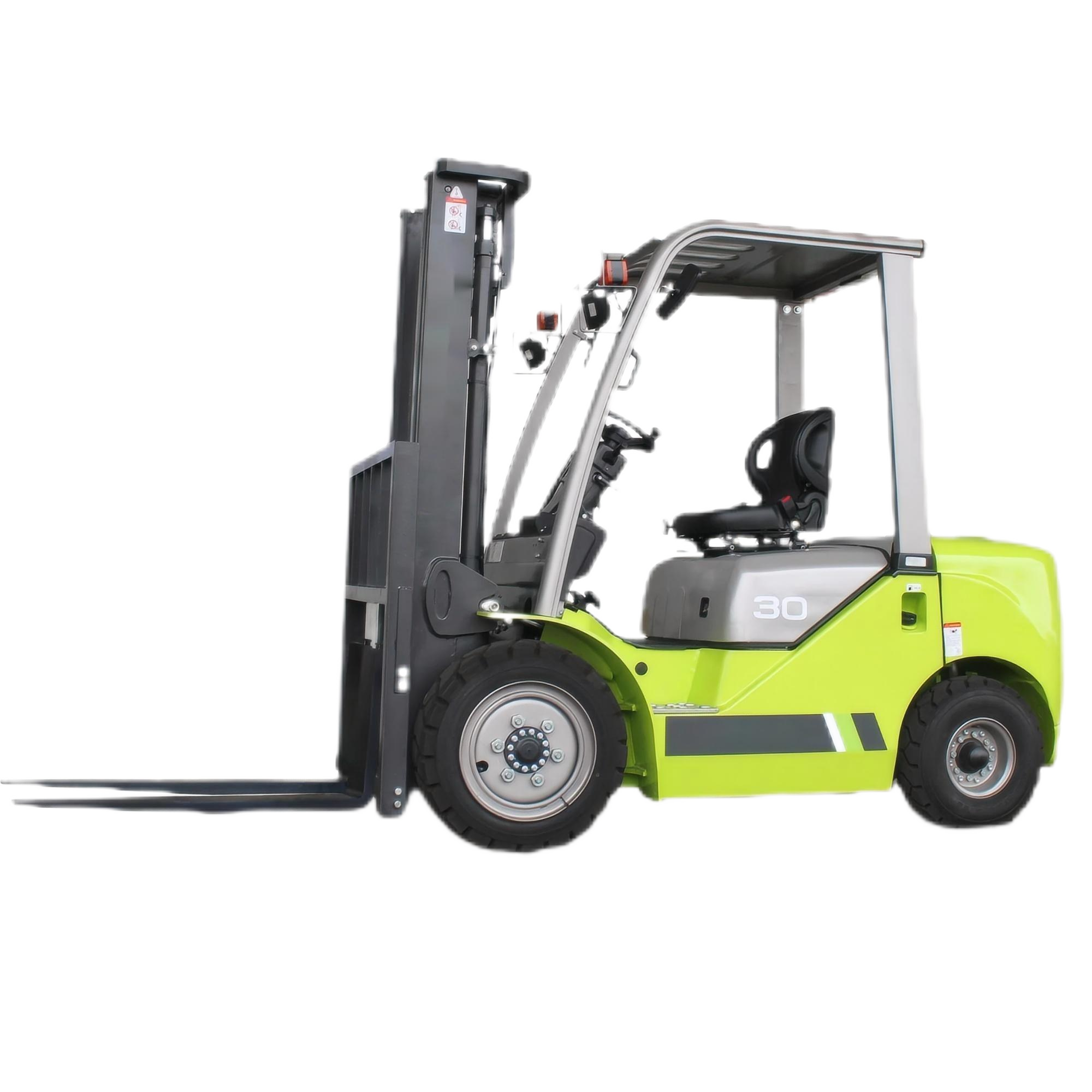
I. Correct Operation Process (Core: "Standardized Actions + Risk Anticipation")
1. Pre-operation: Mandatory Inspection to Eliminate Initial Hazards
- Battery Inspection: Ensure sufficient power (battery gauge shows ≥80%), no looseness or leakage of battery connections, and the charging port cover is properly closed to avoid electrical short-circuit risks.
- Key System Inspection: Test the brake pedal (it should brake quickly without delay when pressed), steering system (flexible steering without jamming), and lights & horn (reverse lights, warning lights, and horn work normally).
- Load Device Inspection: Check if the forks are deformed or cracked, if the lifting chain is evenly tensioned, and if the hydraulic system has no leakage, to ensure the safe loading of goods.
2. In-operation: Strictly Abide by Standards to Avoid Misoperation
- Operating Posture: Sit upright, hold the operating handle firmly with both hands, keep a clear line of sight (especially during high-level stacking, confirm no obstacles at the shelf level), and do not operate while bending over or leaning sideways.
- Speed and Steering Control: The no-load driving speed shall not exceed 5km/h, and the full-load speed shall not exceed 3km/h; reduce speed in advance when turning (speed ≤2km/h) to avoid rollover caused by sudden turns, and honk the horn for warning if necessary.
- Loading Rules: When picking up goods with forks, the distance between the two forks should match the width of the goods, and the center of gravity of the goods should be centered. Overloading is prohibited (the load weight shall not exceed the forklift's rated capacity); when lifting goods, first lift 10-15cm to test stability, then lift slowly. "Rapid lifting while moving" is prohibited.
- Special Scenario Response: Turn on the reverse image/radar (if equipped) when reversing, and ask others to direct if necessary; when driving on wet or oily ground, reduce the steering range to avoid slipping caused by sudden braking.
3. Post-operation: Standardized Parking and Proper Conclusion
- Parking Requirements: Park the forklift in a designated flat area without obstacles, lower the forks to the ground (distance from the ground ≤10cm), pull the handbrake tightly, turn off the power switch, and remove the key.
- Charging Standards: Only use the original matching charger. Keep the charging environment away from fire sources and heat sources. Open the battery cover for ventilation when charging (for lead-acid batteries). Avoid overcharging (cut off the power in time after full charge, generally no more than 8 hours).
II. Daily and Regular Maintenance (Core: "High-frequency Inspection + Periodic Overhaul")
1. Daily Maintenance (Implemented after daily operation, takes 5-10 minutes to complete)
- Cleaning: Wipe off dust on the forklift body, clean up debris on the forks, and check if the fork tips are worn (severely worn forks need to be replaced to prevent goods from slipping).
- Battery Maintenance: For lead-acid batteries, check the electrolyte level weekly (add distilled water if it is below the scale line; tap water or electrolyte is prohibited); lithium batteries do not require water replenishment, but long-term storage with low power should be avoided (charge in time when the power is below 20%).
- Component Inspection: Check the tire pressure (for pneumatic tires) or wear condition (for solid tires), and ensure no foreign objects such as stones in the tire tread; check if the hydraulic oil pipes and joints have leakage, and if there is leakage, stop using the forklift immediately and repair it.
2. Regular Maintenance (Set cycles according to usage frequency, monthly/quarterly maintenance is recommended)
- Monthly Inspection: Tighten the connecting bolts of the forklift chassis and fork frame; test the thickness of the brake pads of the brake system (replace if worn to less than 3mm); check the lubrication of the lifting chain and apply special chain lubricating oil.
- Quarterly Inspection: Arrange professional personnel to test the insulation performance of the motor (to avoid electric leakage); replace the hydraulic oil (according to the forklift manual, generally replace every 600-800 hours); calibrate the battery gauge and pressure gauge to ensure accurate data.
- Annual Overhaul: Contact the manufacturer or professional institutions for comprehensive testing, including battery capacity testing, steering system adjustment, and function verification of safety devices (such as speed limiters and anti-rollover systems), to ensure the equipment meets safety standards.
III. Key Safety Taboos (Must be strictly avoided)
- Overloading and Unbalanced Loading Prohibited: Even short-term "temporary use" may cause fork deformation, hydraulic system damage, or even rollover.
- Live Maintenance Prohibited: When inspecting or maintaining the battery and motor, the power must be turned off and the key removed first to avoid electric shock.
- Parking on Slopes Prohibited: If temporary parking on a slope is necessary, wedge the wheels with triangular blocks, and face the forks uphill to prevent the forklift from sliding.