The Structure of Electric Forklifts
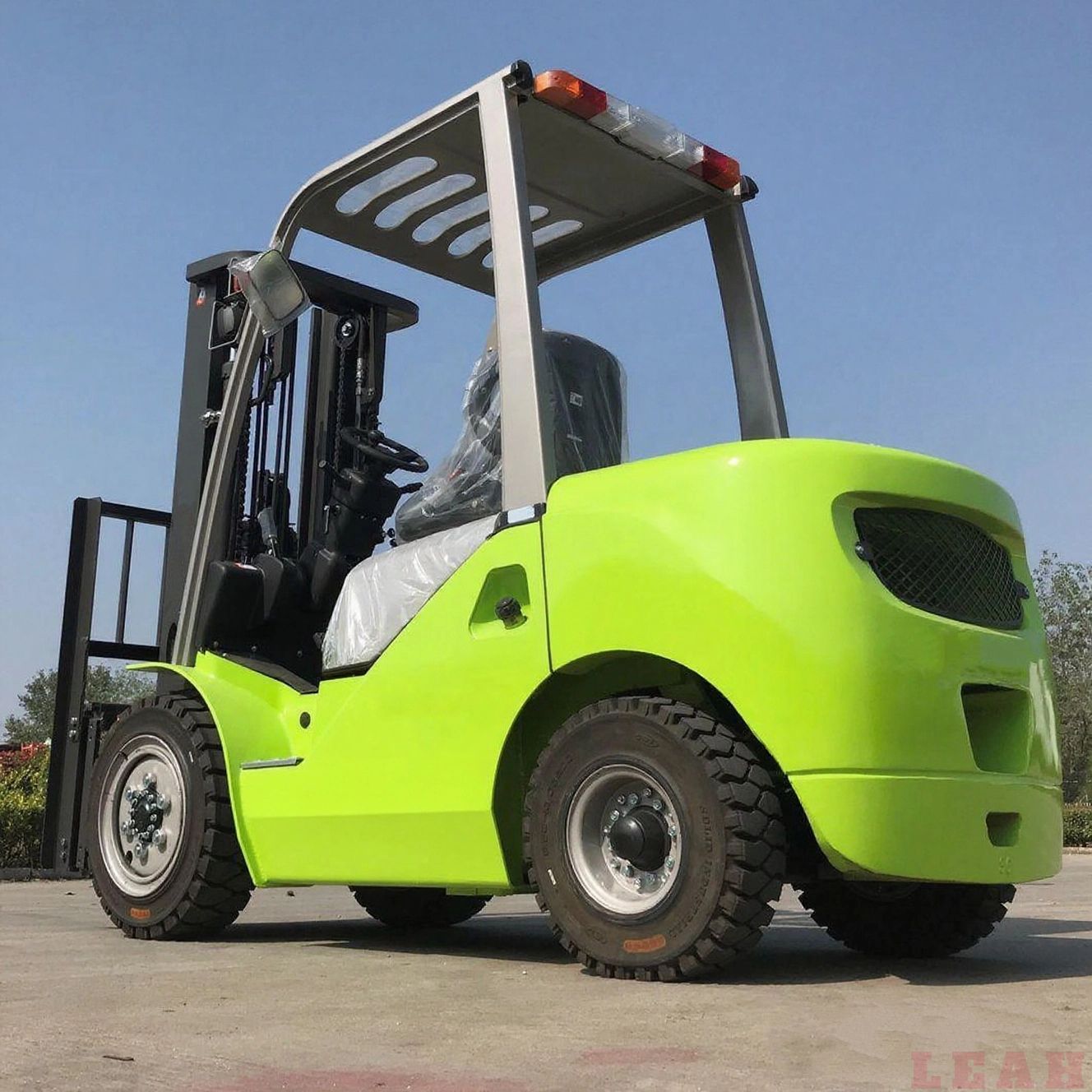
The structure of an electric forklift is composed of multiple precision systems working in synergy, covering core modules such as power, transmission, hydraulic, control, and safety. Below is a detailed analysis based on the latest technologies and industry practices:
1. Power System: Efficient Energy and Driving Core
Battery System
Serving as the "heart" of an electric forklift, the battery system consists of a battery pack, a charger, and a Battery Management System (BMS). Currently, lithium-ion batteries are the mainstream choice. For instance, Clark's 460Ah lithium-ion battery supports multi-shift operations, featuring extremely short charging time and maintenance-free performance; Jungheinrich adopts lithium iron phosphate batteries (LiFePO₄), which offer high safety, support mid-cycle charging, and extend battery life by 20%. Some models still retain lead-acid battery options, allowing switching between battery types to adapt to different working conditions.
Motor Types
- AC Asynchronous Motor: With a simple structure and low cost, it is suitable for small forklifts such as electric pallet trucks.
- DC Motor: Boasting high starting torque, it is often used in working conditions requiring frequent starts and stops, such as warehouse stackers.
- AC Synchronous Motor: Energy-efficient, it is applied in heavy-load scenarios like high-lift forklifts, with excellent speed stability.
- Brushless DC Motor: Featuring low maintenance costs, it is widely used in electric high-lift trucks.
Some high-end models adopt permanent magnet synchronous motors, with an efficiency exceeding 98.5% and an overall vehicle energy saving of more than 15%.
2. Transmission System: The Bridge for Power Transmission
Driving Modes
- Direct Drive Type: The motor is directly connected to the wheels, resulting in low energy loss. It is suitable for light-load and short-distance operations.
- Gear Transmission Type: Characterized by a simple structure and convenient maintenance, it is common in mid-to-low-end models.
- Chain Transmission Type: With strong load-bearing capacity, it is used in heavy-load forklifts such as port tractors.
- Hydraulic Transmission Type: Ensures smooth transmission and is suitable for forklifts operating at high speeds.
- Hybrid Drive Type: Combines multiple methods and intelligently switches according to working conditions to improve efficiency.
The steering system generally adopts electronic power steering technology, which drives the steering gear through a motor to achieve precise control and low energy consumption. For example, the steering system of Xinsheng Machinery has a fast response speed and can maintain stability even under heavy loads.
3. Hydraulic System: The Source of Force Output
The hydraulic system is responsible for actions such as cargo lifting and tilting, and is composed of the following components:
- Hydraulic Pump: Gear pumps, vane pumps, or piston pumps that convert electrical energy into hydraulic energy.
- Hydraulic Cylinder: Double-acting or single-acting cylinders that realize linear motion.
- Hydraulic Valve: Relief valves, pressure reducing valves, etc., which regulate pressure and flow.
- Hydraulic Oil: Mineral oil or synthetic oil that transmits energy and lubricates components.
High-end models are equipped with intelligent hydraulic control systems, which can automatically adjust pressure according to the load to reduce energy consumption.
4. Control System: Intelligent and Precise Operation
The core components adopt microprocessor technology, integrating a driver's console, sensors (such as tilt sensors and load sensors), and actuators. For example, the intelligent forklifts of Huaqing Kesheng are equipped with lidar, 3D cameras, and blind spot monitoring, supporting millimeter-level navigation accuracy.
Intelligent Functions
- Energy Management: Real-time monitoring of battery status and optimization of charging and discharging strategies.
- Safety Early Warning: Overspeed alarm, overload warning, collision monitoring, etc.
- Remote Monitoring: Realization of vehicle positioning, trajectory tracking, and fault diagnosis through the Internet of Things (IoT) platform.
Some models support seamless connection with the Warehouse Management System (WMS) to automatically plan operation paths.
5. Structure and Materials: Balance Between Strength and Lightweight
Frame and Mast
- Frame: Welded from high-strength steel, balancing strength and lightweight. For example, the frame of Xinsheng Machinery has an optimized structure, which reduces weight while ensuring load-bearing capacity.
- Mast: Made of Q345 low-alloy high-strength steel or aluminum alloy. Aluminum alloy masts are lightweight and corrosion-resistant, suitable for weight-sensitive scenarios; Q345 steel is used for heavy-load forklifts.
Tire Types
- Pneumatic Tires: With good elasticity and adhesion performance, they are suitable for flat surfaces such as warehouses.
- Pneumatic Rim Solid Tires: Puncture-resistant and maintenance-free, they are suitable for complex surfaces such as ports.
- Press-Fit Solid Tires: Featuring small diameter and high pressure-bearing capacity, they are used for forklifts with large loads but limited wheel size.
6. Safety and Environmental Protection Design: The Cornerstone of Sustainable Development
Safety System
- Basic Protection: Emergency stop buttons, limit switches, safety belts, etc.
- Intelligent Protection: Automatic speed limiting, collision warning, driver behavior monitoring (such as unfastened seatbelt alarm).
- Regulatory Compliance: Compliant with national standards such as GB/T 35205.4-2025 (Safety Requirements for Off-Road Forklifts) and international standards like ISO 3691, with enhanced stability testing and electrical safety.
Environmental Protection Technology
- Regenerative Braking: Converts kinetic energy into electrical energy during braking, with a recovery rate of approximately 30%, reducing energy consumption and extending battery life.
- Lightweight Materials: The application of aluminum alloy and high-strength steel reduces the overall weight of the vehicle and lowers energy consumption.
- Clean Energy: Lithium-ion batteries achieve zero emissions, replacing traditional lead-acid batteries to reduce pollution.
7. Cooling and Maintenance: Guarantee for Long-Term Operation
Cooling System
- Liquid Cooling Technology: Sany electric forklifts adopt a three-electrical liquid cooling system (for battery, motor, and electronic control), which can still operate stably at a high temperature of 60℃, reducing the temperature of core components by 30%.
- Air Cooling System: Used for heat dissipation of controllers and motors, with a simple structure and low cost.
Maintenance
- Cycle: The first maintenance is at 300 hours, regular maintenance is every 500 hours, in-depth maintenance is every 2000 hours, and a comprehensive annual inspection is conducted.
- Key Items: Inspection of battery electrolyte, replacement of hydraulic oil, maintenance of the braking system, and monitoring of tire wear.
The maintenance-free feature of lithium-ion batteries significantly reduces maintenance costs, decreasing maintenance workload by 80% compared with lead-acid batteries.
Summary
The structure of an
electric forklift is an integration of multi-disciplinary technologies such as mechanics, electronics, and materials, and its design trend presents intelligence, lightweight, and green development. From the wide application of lithium-ion batteries to the breakthrough of liquid cooling technology, from the energy recovery of regenerative braking to the in-depth integration of the Internet of Things,
electric forklifts are constantly improving efficiency, reducing costs, and promoting the logistics industry towards low-carbon transformation. When making a selection, it is necessary to comprehensively consider working condition requirements, maintenance costs, and technological prospects to achieve the best cost-effectiveness and sustainable operation.